
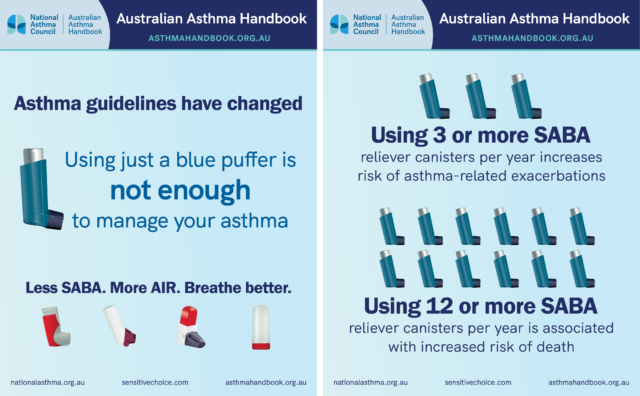
Asthma management guidelines have changed.
The National Asthma Council (NAC) has recently updated the guidelines for the way asthma is managed in Australia.
These guidelines are outlined in the NAC’s Australian Asthma Handbook - the national clinical guidelines used by health professionals to help you manage your asthma.
The updated guidelines include changes to both the diagnosis and management of asthma. We now recommend 'less SABA, more AIR' to help improve asthma control.
A blue puffer (inhaler) contains a medicine called short-acting beta2 agonist (SABA). This does not treat the underlying inflammation that causes asthma. It does not prevent symptoms or attacks. It just relieves symptoms and helps relieve asthma attacks that have already started.
Many Australians are used to managing their own asthma just with blue puffers that they buy over the counter at the pharmacy, but that is no longer recommended for adults and adolescents. It is risky to rely on a blue puffer for your asthma. Relying only on a blue puffer, or needing it often, means you are at risk of severe asthma attacks.
The NAC’s updated asthma guidelines now recommend that all adults and adolescents with asthma, and most children with asthma, should use inhalers that treat the underlying inflammation, not just relieve symptoms.
Inhalers that treat inflammation, as well as relieve symptoms, are called anti-inflammatory relievers (AIR) - a different type of quick-relief medicine. These are recommended instead of blue puffers (SABA) for adults and adolescents. Anti-inflammatory relievers help prevent asthma attacks, which means improved asthma control, less reliance on blue puffers and less risk of severe asthma attacks and ending up in hospital.
The NAC encourages people with asthma to see their health professional to discuss how the new recommendations may affect them and to make sure they are on the right treatment and have an up-to-date asthma action plan.
Ask your doctor, pharmacist or nurse practitioner today about less SABA, more AIR.

Trusted, evidence-based information for health professionals, people with asthma and their carers.
Helping people with asthma and allergies to make informed choices.

Recognise common asthma triggers and how to manage them in everyday life.
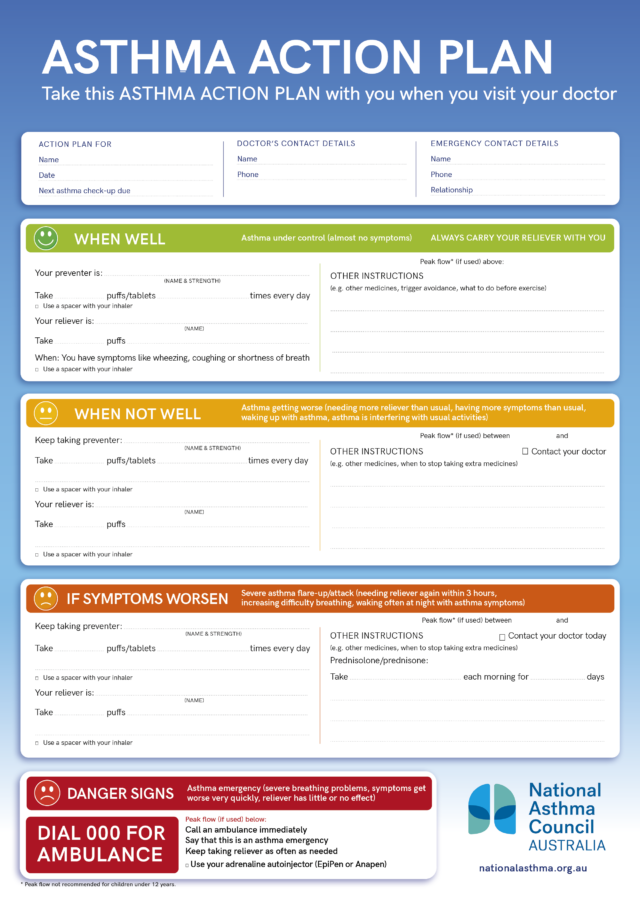
View and download a range of asthma action plans.

Our How-to video library includes demonstrations of correct technique for all the main types of inhalers and nasal sprays.

With regular reviews and good management, people with asthma can lead normal, active lives.