
With regular reviews and good management, people with asthma can lead normal, active lives.
It is important to have regular asthma reviews with your doctor. An asthma review is a check-up with your doctor, nurse practitioner or pharmacist practitioner to ensure your asthma is well controlled.
The National Asthma Council recommends having a review (or check-up) every year to:
With regular reviews and good management, people with asthma can lead normal, active lives.
For good asthma management, it is important that you:
People with asthma sometimes also have other linked chronic respiratory conditions, such as allergic rhinitis (hay fever) or chronic obstructive pulmonary disease (COPD). If you have allergies or COPD as well as asthma, it is important to treat the symptoms of both conditions, as treating one can help you manage the other.
Find out more: Asthma triggers
In an asthma review, your doctor will ask you a set of health questions used to help measure your asthma control (asthma control test). This includes asking about symptoms during the previous 4 weeks:
Find out more: Questionnaire based tools used by health professionals
Regularly waking from asthma symptoms or using your reliever medication more than 2 to 3 times a week (except before exercise) should not be a ‘normal’ part of having asthma.
If this sounds familiar, see your doctor for an asthma review.

Asthma is a treatable health condition. With good management people with asthma can lead normal, active lives.
Helping people with asthma and allergies to make informed choices.

Medicines, asthma action plans and regular reviews are essential for asthma management.

Medicines are essential for managing asthma.
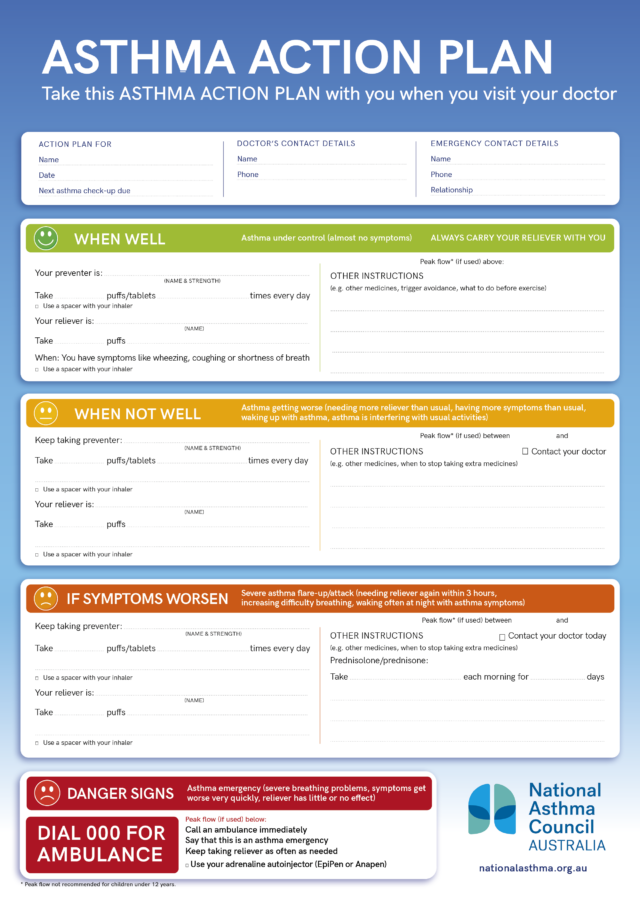
Written asthma action plans are one of the most effective asthma interventions available.

Our How-to video library includes demonstrations of correct technique for all the main types of inhalers and nasal sprays.