National Asthma Council Australia

What to do in an asthma emergency

Quick action may help prevent an asthma attack from becoming an asthma emergency.


Signs you are having an ASTHMA ATTACK

  • You have increasing wheezing, cough, chest tightness or shortness of breath.
  • You are waking often at night with asthma symptoms.
  • You need to use your blue/grey reliever again within 3 hours.

When is it an ASTHMA EMERGENCY?

  • Your symptoms get worse very quickly.
  • You have severe shortness of breath, can’t speak comfortably or lips look blue.
  • You get little or no relief from your reliever inhaler.

Signs that someone needs first aid for an ASTHMA ATTACK

Any of these:

  • suddenly hard to breathe
  • can’t talk normally
  • coughing
  • wheezing
  • feeling of chest tightness.

What to do

Call an ambulance immediately:
Dial 000 
Say this is an ASTHMA EMERGENCY

Not sure if it's asthma?

If a person stays conscious and their main problem seems to be breathing, follow the asthma first aid steps in the charts below. Asthma reliever medicine is unlikely to harm them even if they do not have asthma.

If someone is unconscious, start life support.

If you are ever unsure about what you should do 

CALL AMBULANCE IMMEDIATELY (DIAL 000)

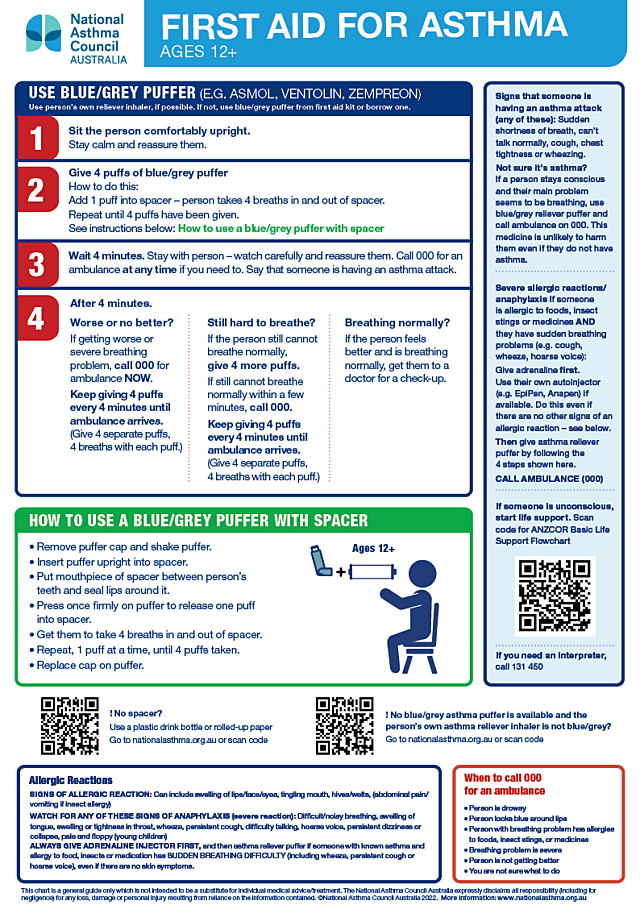
Asthma first aid using blue/grey puffer for adults and adolescents aged 12 years and over

Download the First aid for asthma ages 12+ chart.
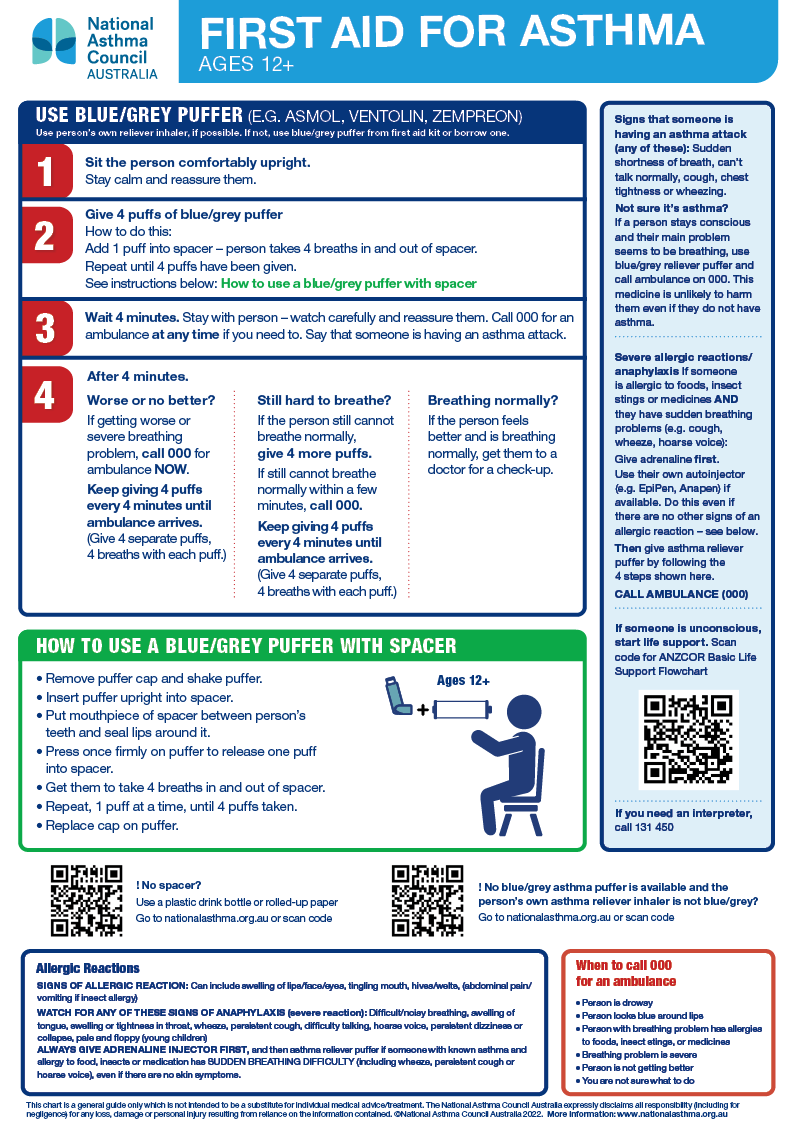
National Asthma Council's First aid for asthma chart

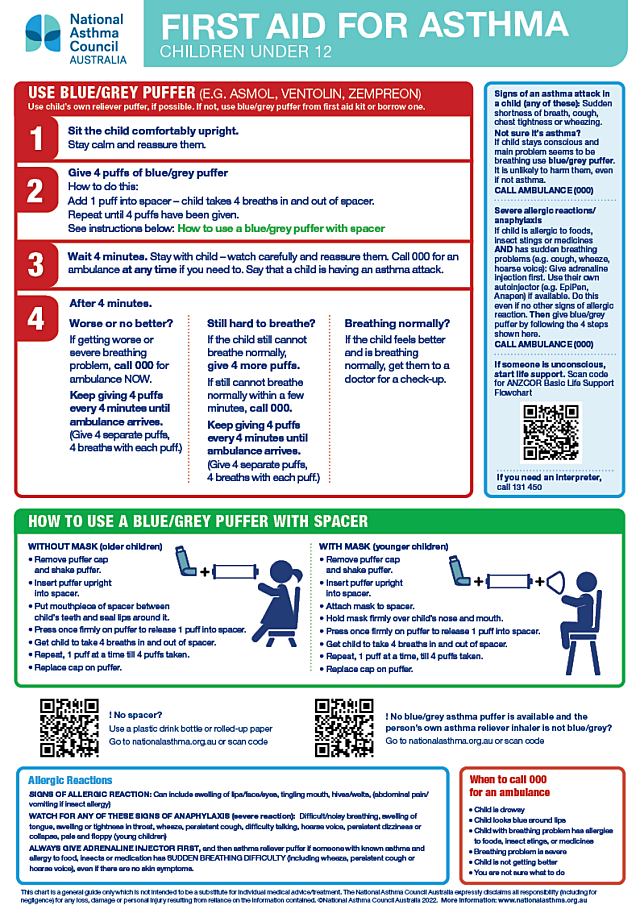
Asthma first aid using blue/grey puffer for children under 12 years

Download the First aid for asthma ages children under 12 chart.
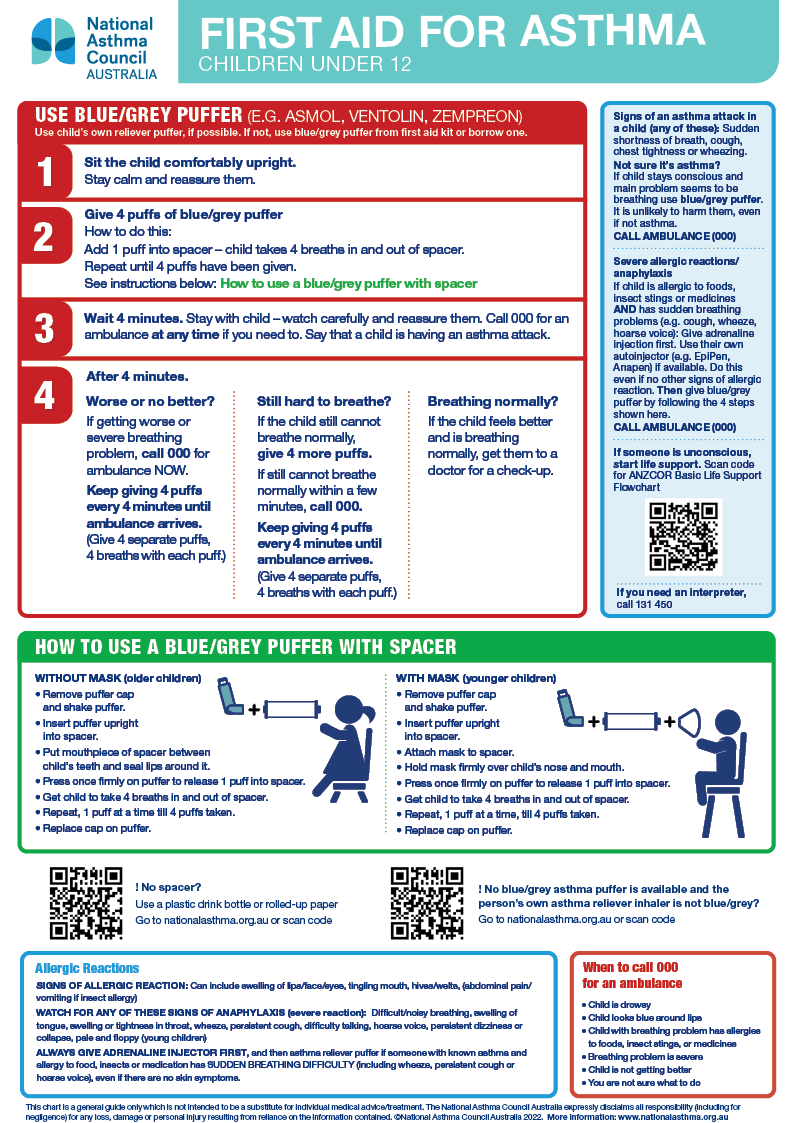
National Asthma Council's First aid for asthma chart for children under 12


Tremor (e.g. shaky hands) can be a side-effect of these medications. High doses can cause rapid pulse rate. Use it as needed for asthma symptoms. After the person is breathing normally again, do not keep giving extra doses.

How to use different types of relievers when someone is having an asthma attack.

People with asthma use different reliever inhalers when they have asthma symptoms.

Which type of inhaler does the person have?


Short-acting bronchodilators (relievers)

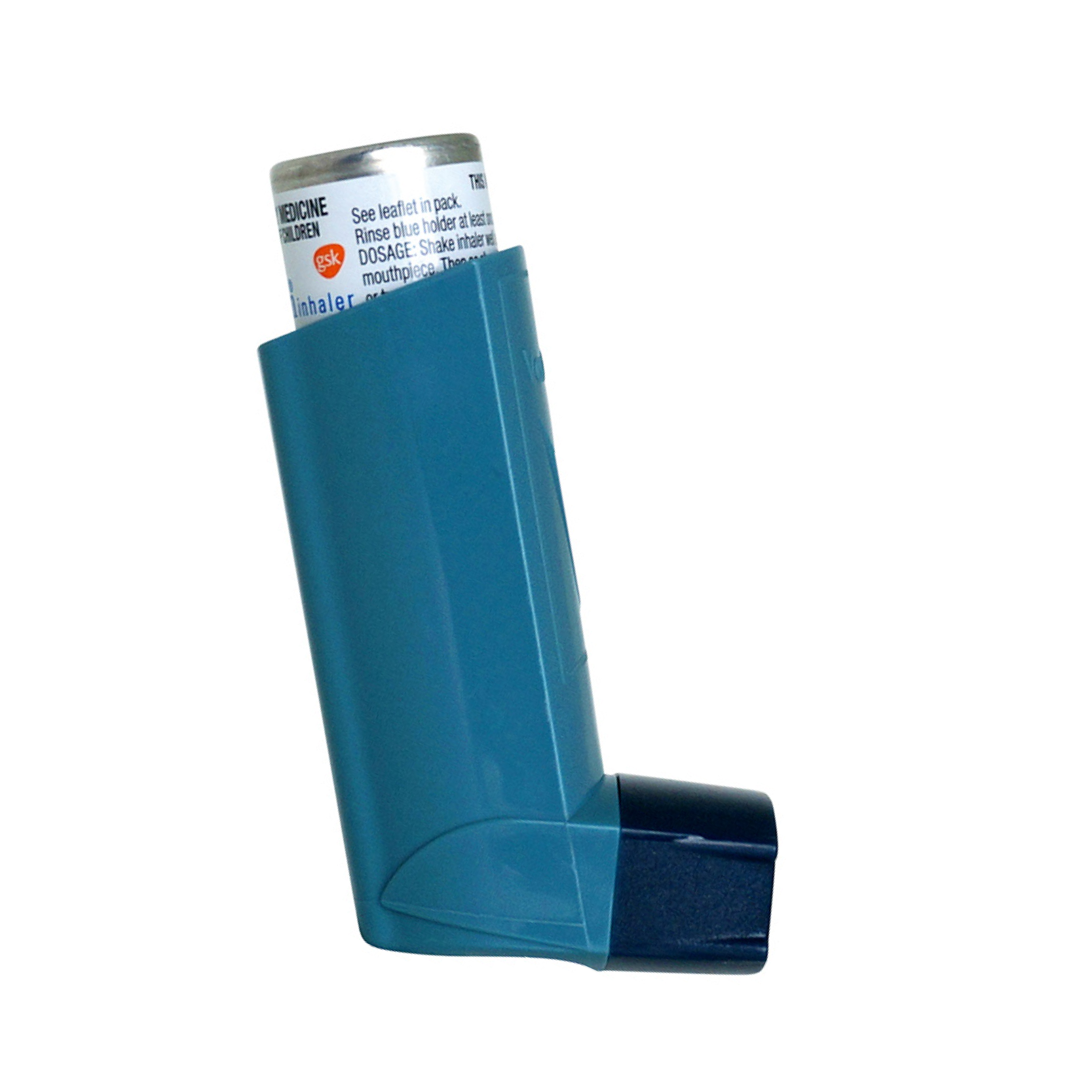
Ventolin (salbutamol) inhaler
Ventolin (salbutamol) inhaler 
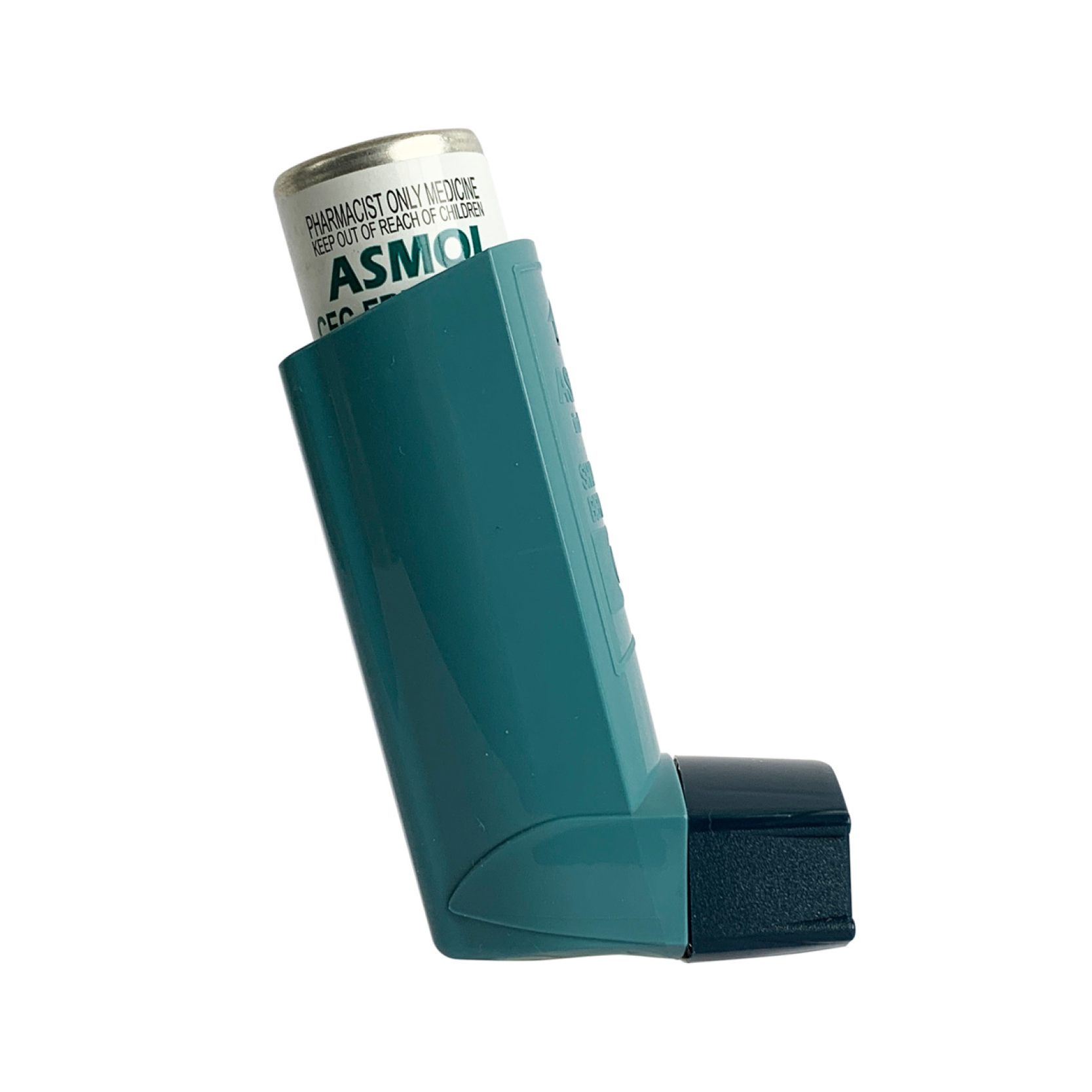
Asmol (salbutamol) inhaler
Zempreon (salbutamol) inhaler

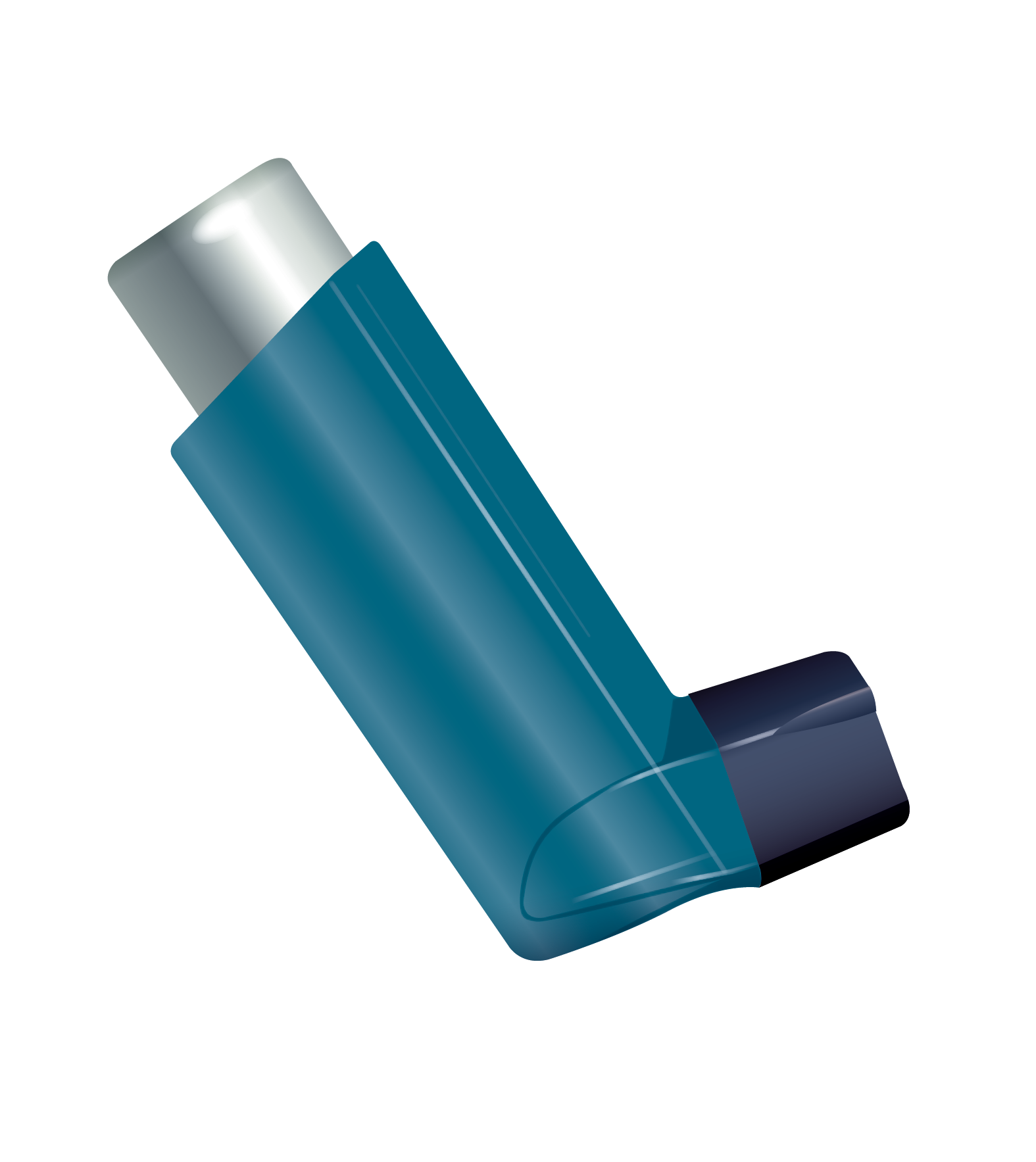
Blue/grey puffer (salbutamol) follow the steps in the First aid for asthma ages 12+ chart and First aid for asthma children under 12 chart


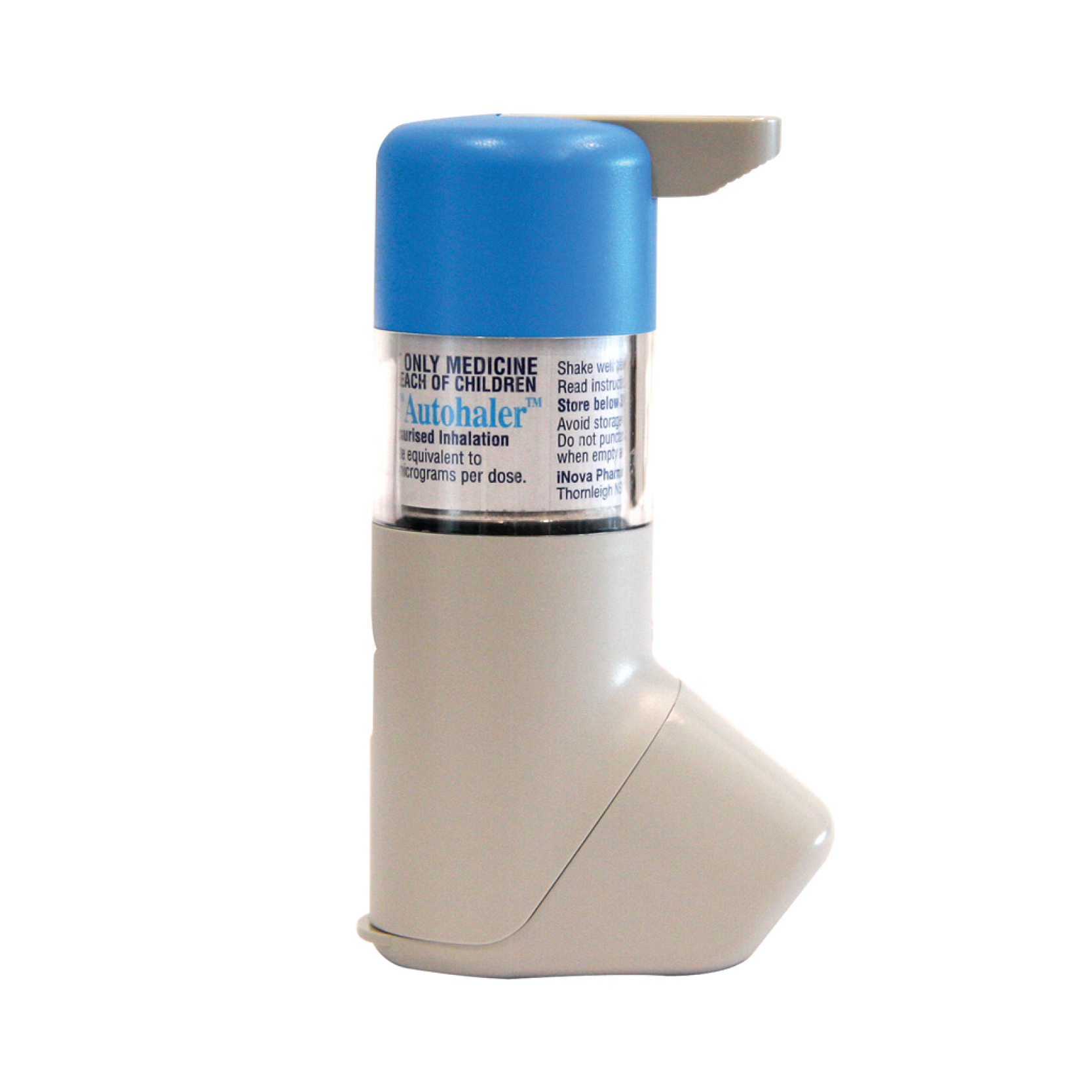
Airomir (salbutamol) Autohaler
Airomir (salbutamol) Autohaler 
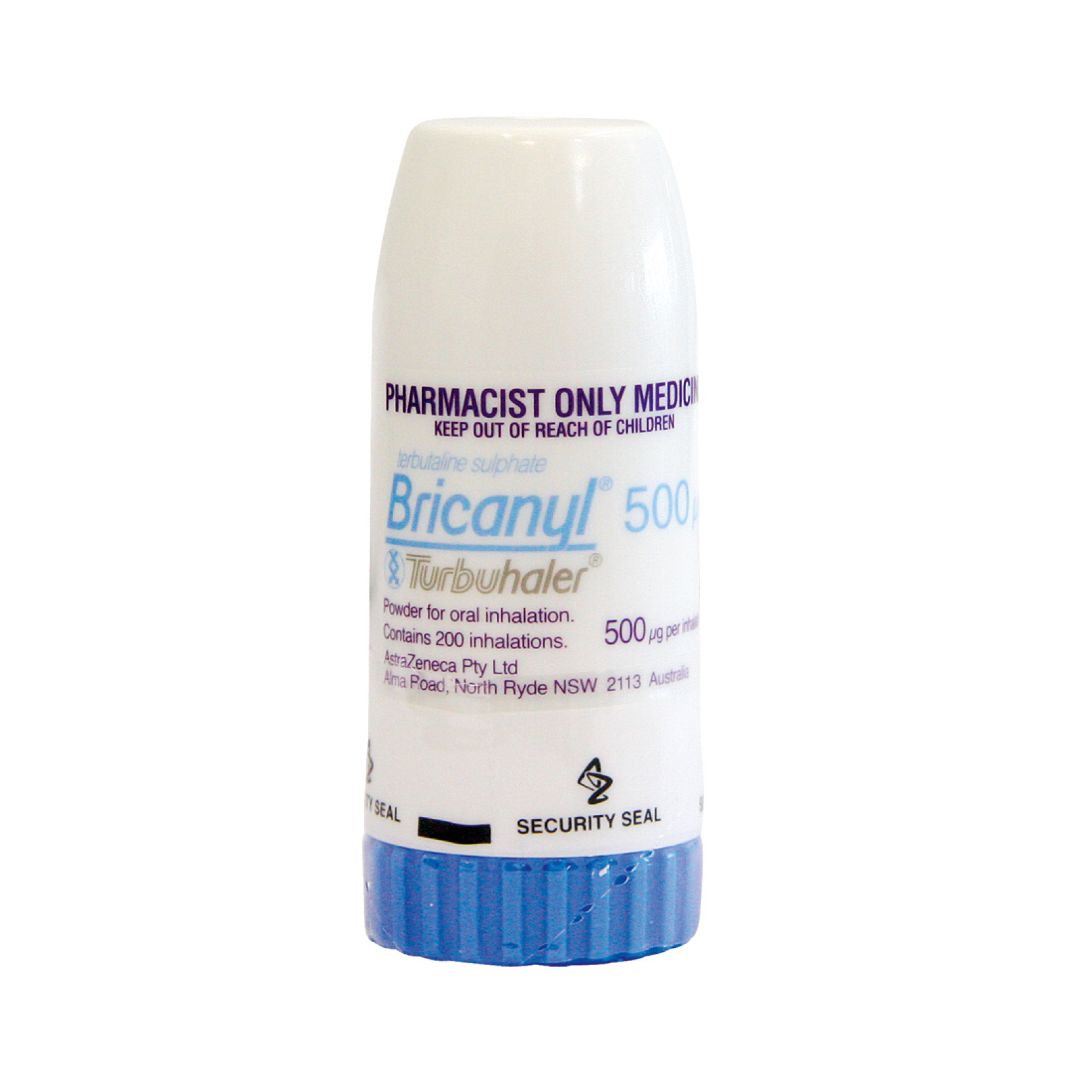
Bricanyl (terbutaline) Turbuhaler
Bricanyl Turbuhaler 


Bricanyl (terbutaline) Turbuhaler 

Anti-inflammatory relievers (AIR)


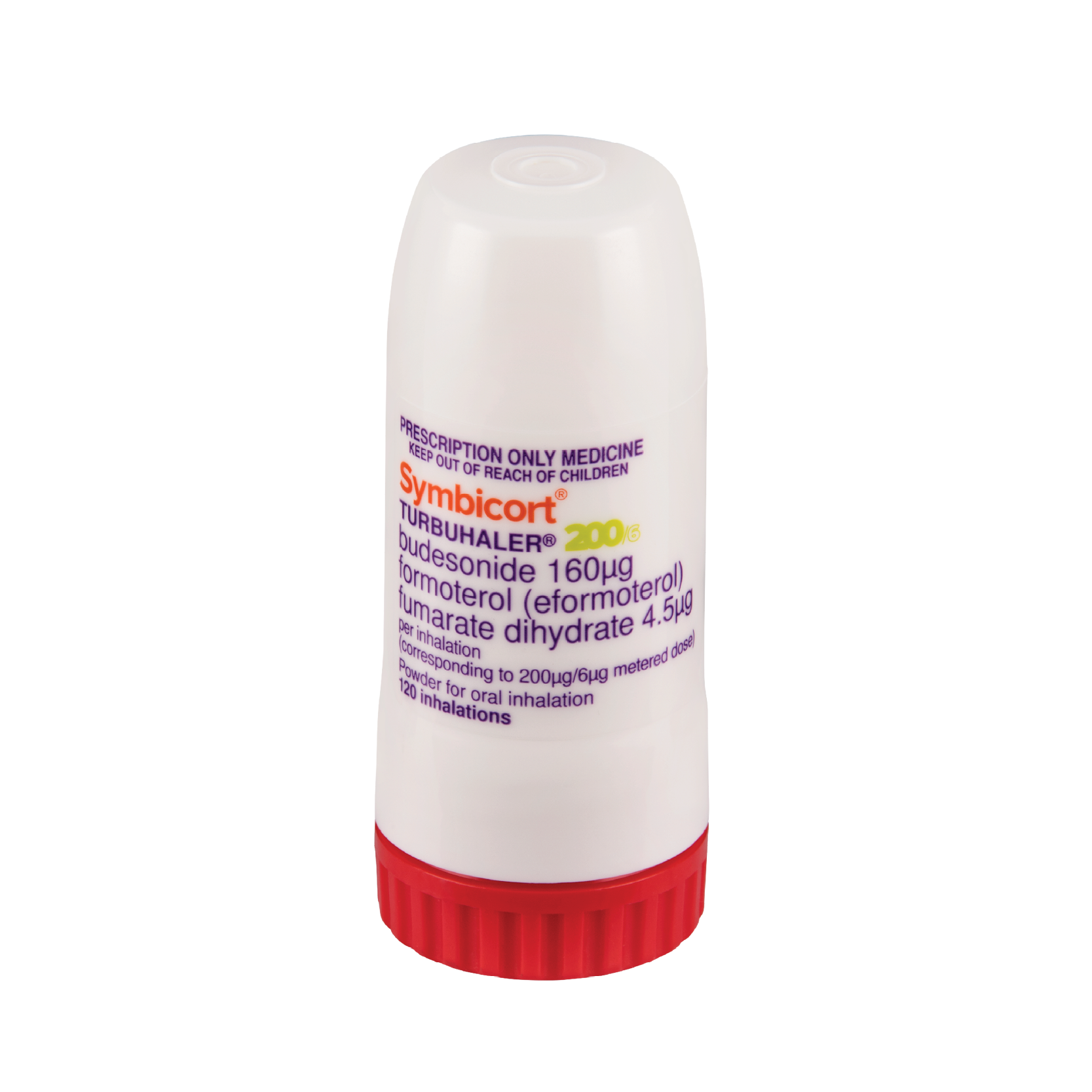
Symbicort Turbuhaler 200/6
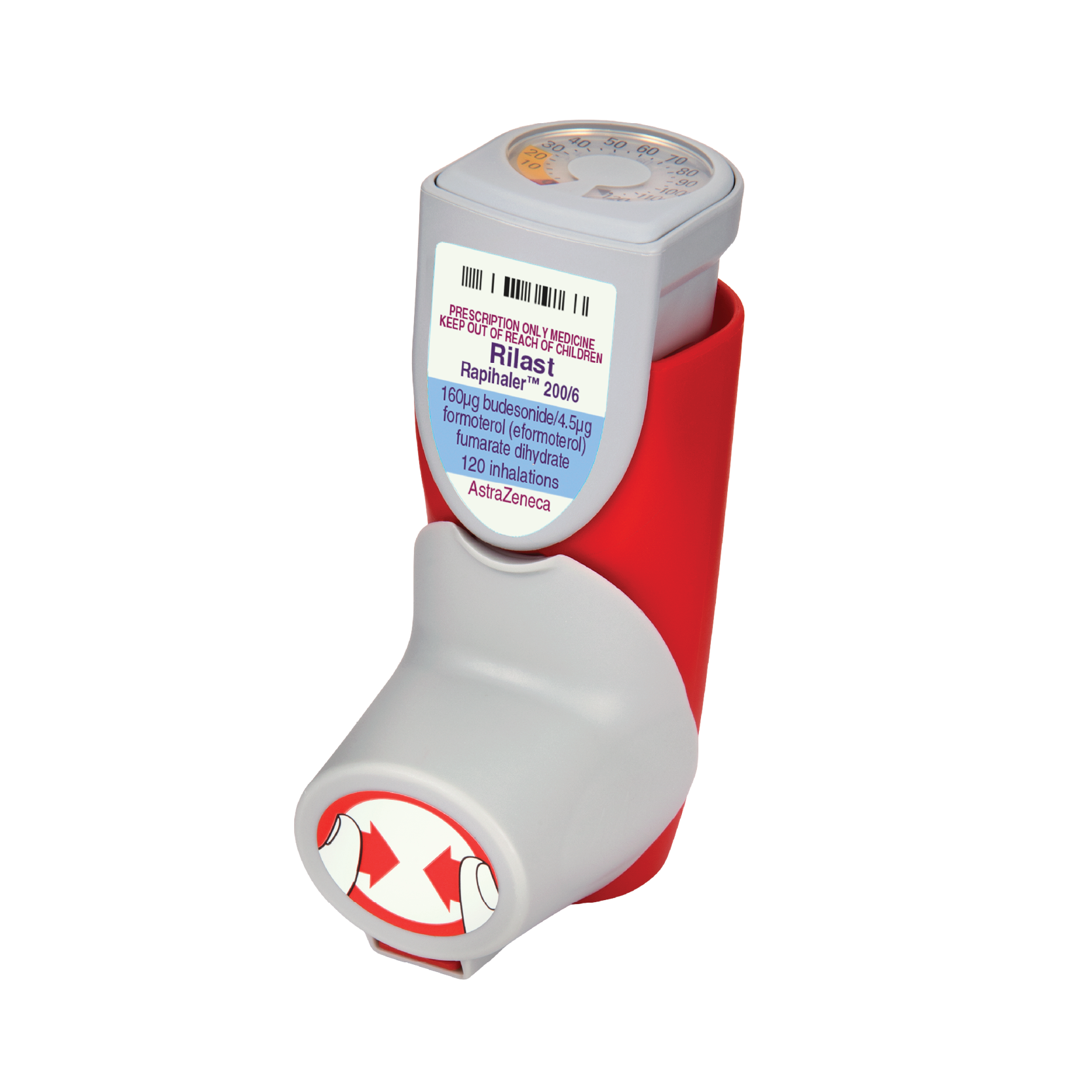
Rilast Turbuhaler 200/6


Symbicort Turbuhaler (budesonide-formoterol) inhaler 200/6


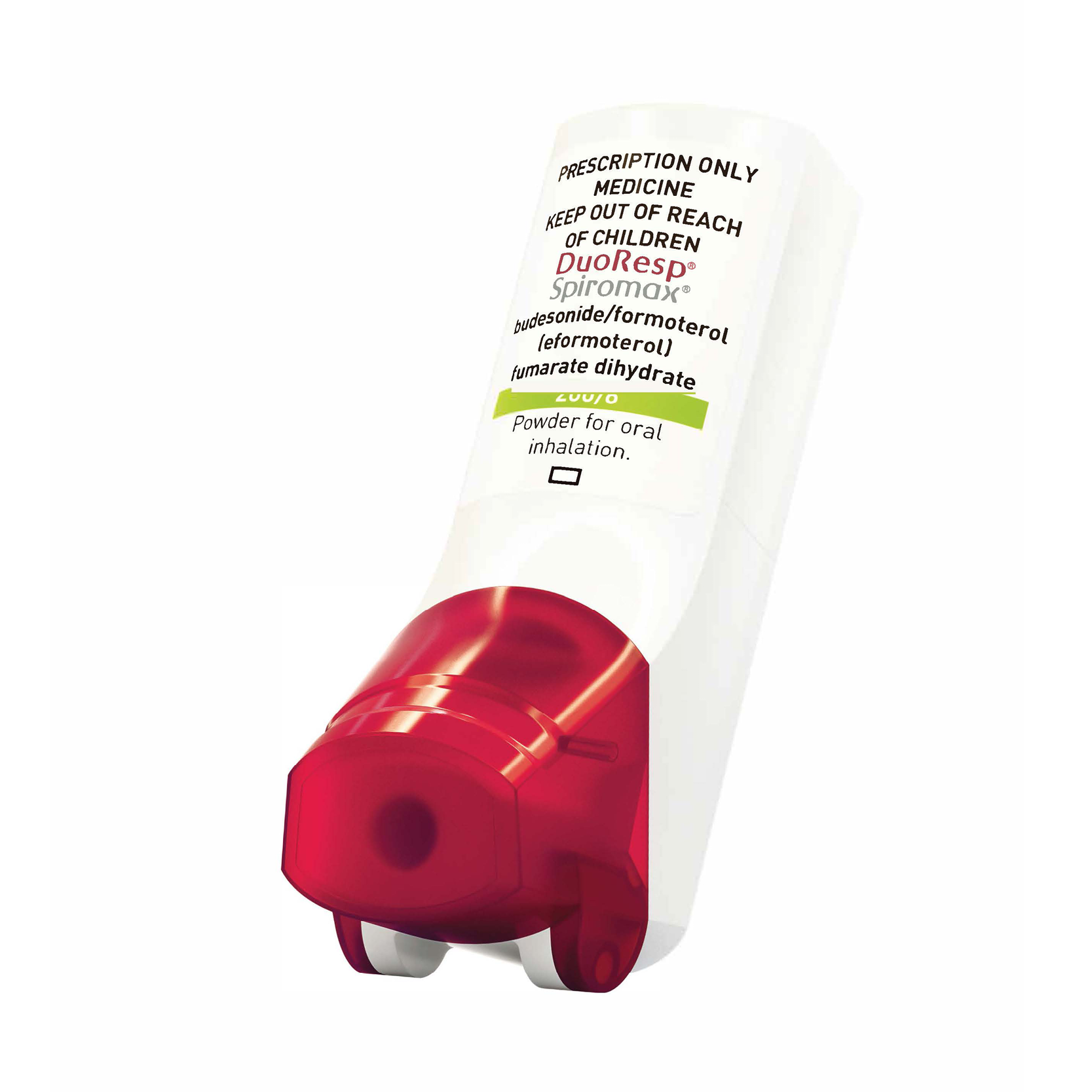
DuoResp Spiromax 200/6
DuoResp Spiromax (budesonide-formoterol) inhaler
Bufomix Easyhaler 200/6


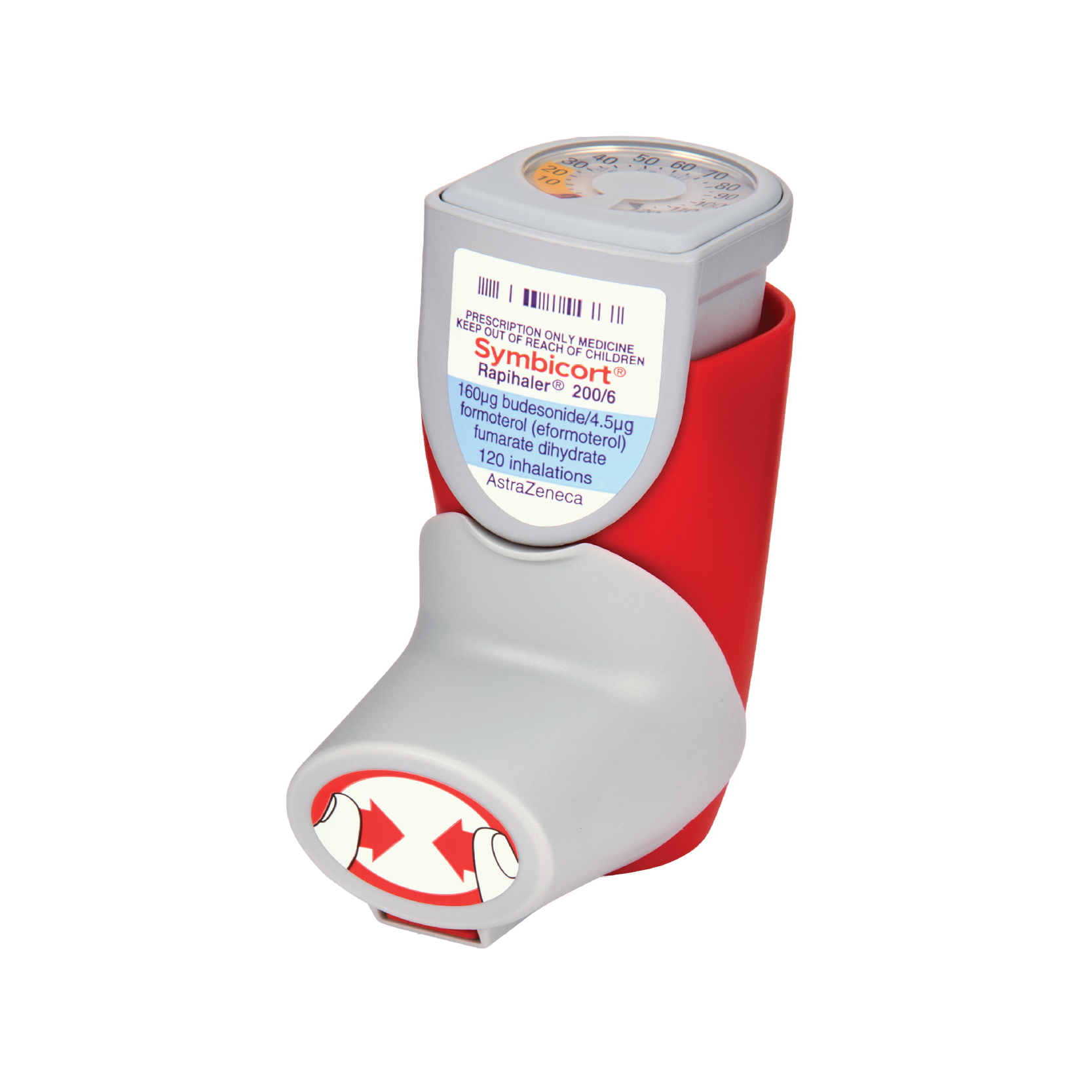
Symbicort Rapihaler 100/3


Symbicort Rapihaler (budesonide-formoterol) inhaler
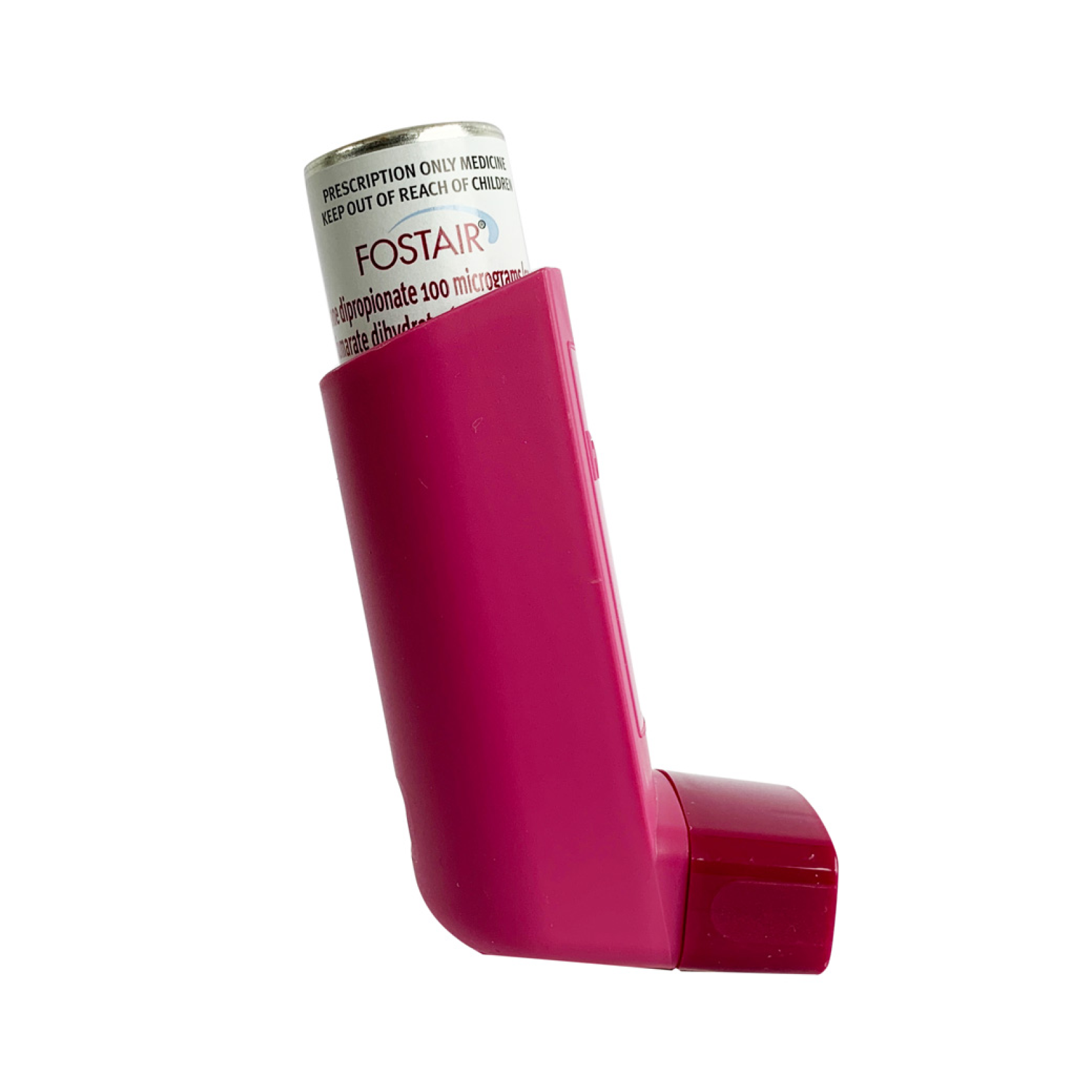
Fostair 100/6 inhaler


Fostair (beclometasone-formoterol) puffer

No spacer available?

How to make a spacer with a plastic drink bottle

  1. Make a hole in the bottom of the bottle – no bigger than puffer mouthpiece.
  2. Shake puffer.
  3. Push puffer mouthpiece tightly into hole in bottom of bottle – keep puffer upright.
  4. Put the open top of bottle in person’s mouth and seal lips around it tightly.
  5. Press firmly on puffer to fire a puff into the bottle.
  6. (Follow instructions in FIRST AID FOR ASTHMA chart)

How to make a spacer from a piece of paper

  1. Roll up a piece of paper to fit tightly around the mouthpiece of the puffer.
  2. Shake puffer.
  3. Put the other end of the rolled-up paper tube in the person’s mouth and seal lips around it tightly.
  4. Keep the puffer upright.
  5. Press firmly on puffer to fire a puff into the paper tube.

(Follow instructions in FIRST AID FOR ASTHMA chart)

How to give blue/grey puffer without a spacer (for adults, when no spacer available)

Use only if a spacer is not available.
  1. Remove cap. (Some must be squeezed at the sides to release). 
  2. Check dose counter (if device has one). 
  3. Hold inhaler upright and shake well.* 
  4. Breathe out gently (away from inhaler). 
  5. Put mouthpiece between teeth (without biting) and close lips to form good seal. 
  6. Start to breathe in slowly through mouth and, at the same time, press down firmly on canister. 
  7. Continue to breathe in slowly and deeply for 3 to 5 seconds. 
  8. Hold breath for about 5 to 10 seconds, or as long as comfortable. 
  9. While holding breath, remove inhaler from mouth. 
  10. Breathe out gently (away from inhaler). 
  11. If more than one dose is needed, repeat all steps starting from step 3. 
  12. Replace cap.