
Perform asthma first aid using an Airomir Autohaler (salbutamol) inhaler
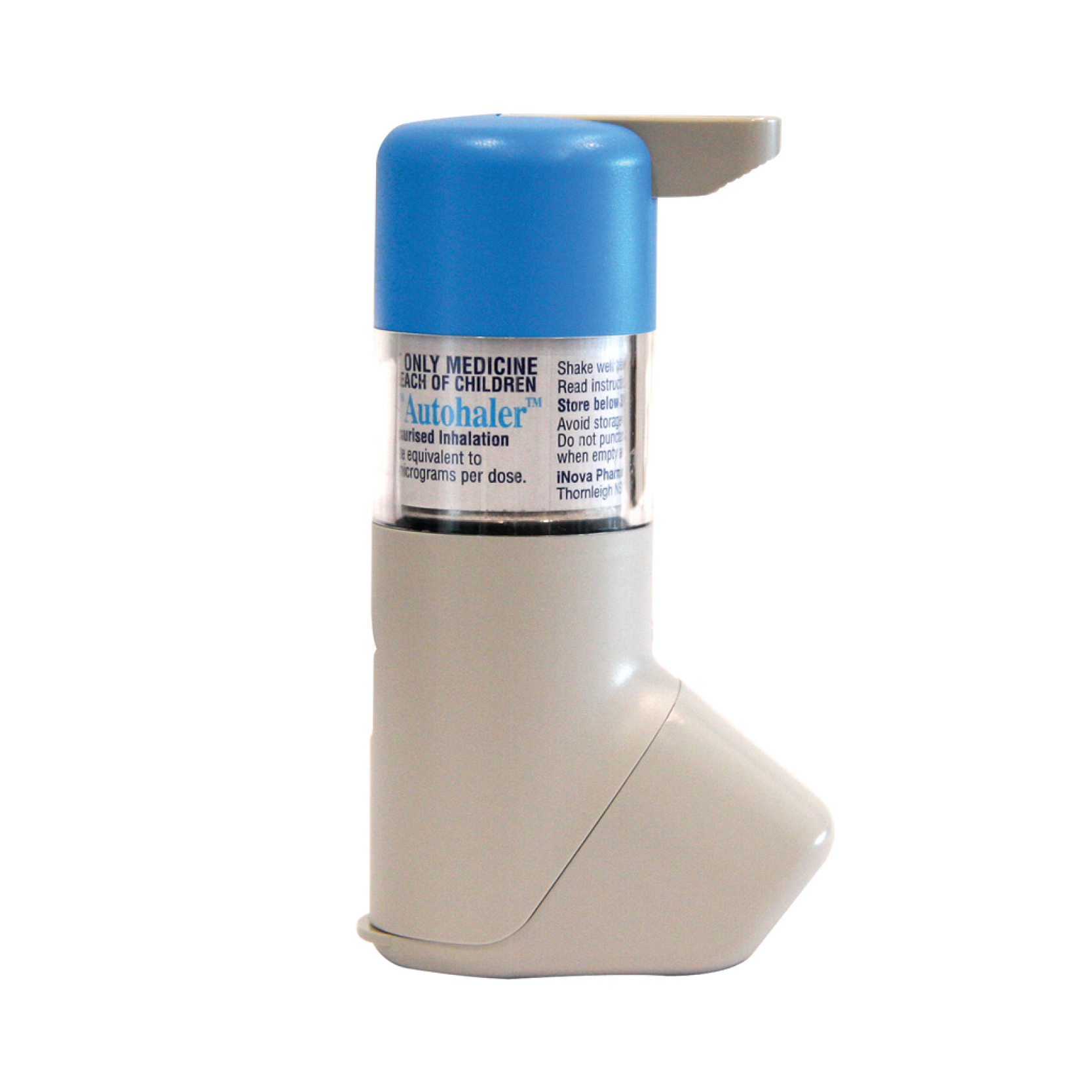
Download First aid for asthma 12+ chart (using a blue/grey inhaler).
Any of these:
If a person stays conscious and their main problem seems to be breathing, follow the asthma first aid steps in the charts below. Asthma reliever medicine is unlikely to harm them even if they do not have asthma.
If someone is unconscious, start life support.
If you are ever unsure about what you should do
CALL AMBULANCE IMMEDIATELY (DIAL 000)


Tremor (e.g. shaky hands) can be a side-effect of this medicine. High doses can cause rapid pulse rate. Use it as needed for asthma symptoms. After the person is breathing normally again, do not keep giving extra doses.
Download First aid for asthma using combination inhalers chart.
If someone has sudden breathing problems (e.g., wheeze, cough, hoarse voice) AND they are allergic to foods, insect stings or medicines:
Give adrenaline first. Use their own autoinjector (e.g., EpiPen) if available.
Do this even if there are no other signs of an allergic reaction.
Then follow the asthma first aid steps.
Signs of mild-to-moderate allergic reaction:
WATCH FOR ANY ONE OF THE FOLLOWING SIGNS OF ANAPHYLAXIS (SEVERE ALLERGIC REACTION):
ALWAYS GIVE ADRENALINE INJECTOR FIRST, and then asthma reliever puffer if someone with known asthma and allergy to food, insects or medication has SUDDEN BREATHING DIFFICULTY (including wheeze, persistent cough or hoarse voice), even if there are no skin symptoms.
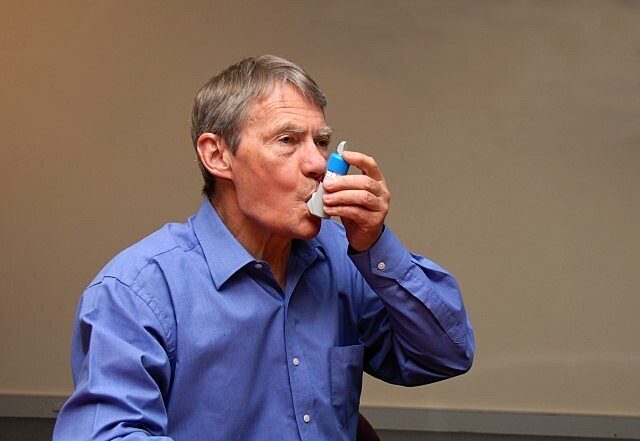
Watch a guided video tutorial with step-by-step instructions for using Autohaler.
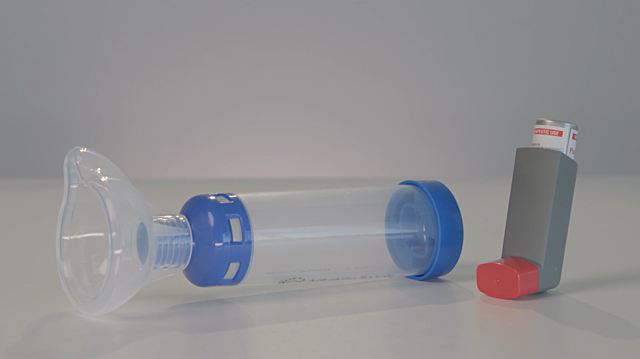
Watch the video and follow guided instructions with tips about using your inhaler and spacer.
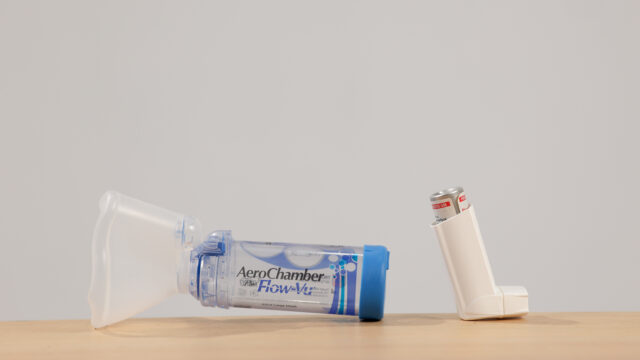
Watch a guided video tutorial with step-by-step instructions for using a metered dose inhaler (puffer) with a spacer for adults.
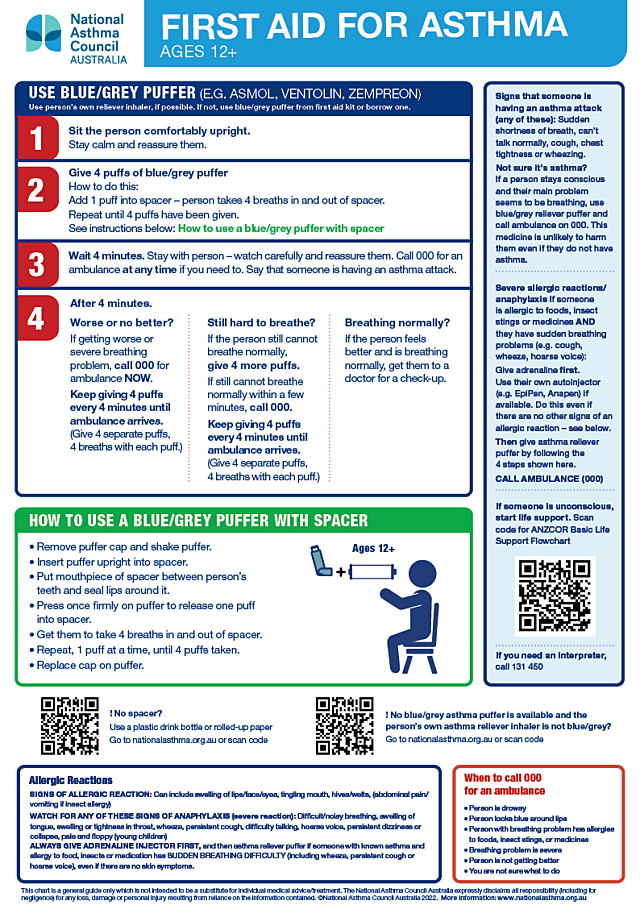
Quick action may help prevent an asthma attack from becoming an asthma emergency. Learn first aid instructions for those aged 12+.
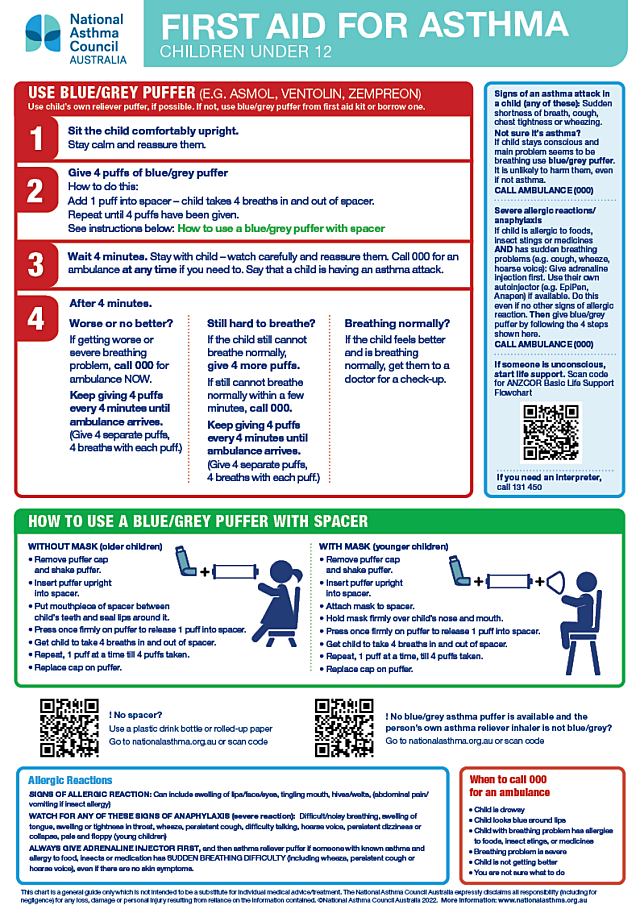
Quick action may help prevent an asthma attack from becoming an asthma emergency. Learn first aid instructions for children under 12.
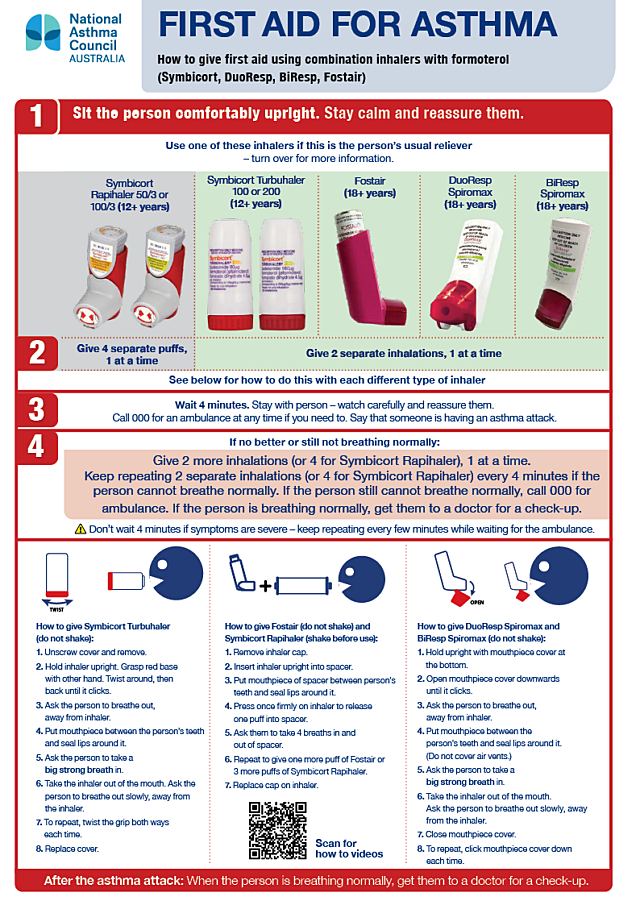
How to give first aid using combination inhalers with formoterol (Symbicort, DuoResp, BiResp, Fostair)