
Medicines are essential for managing asthma.
Medicines are essential for managing asthma. Asthma medicines work in two main ways:
Most asthma medicines come in inhalers (puffers). Some also come as tablets, and a few specialised treatments are given as injections.
Your doctor will decide which medicines are right for you and explain how to use them. Do not change your asthma medicines without talking to your doctor first.
Quick-relief inhalers are used when you have asthma symptoms such as wheeze, cough, chest tightness or shortness of breath, or sometimes before exercise if your doctor has advised this.
There are two main types of quick‑relief inhaler used for asthma in Australia:
An anti-inflammatory reliever (AIR) inhaler is now recommended for people aged 12 years and over, instead of a blue puffer.
An AIR inhaler contains two medicines that work together:
You take this inhaler when you have symptoms. Some people also take it as a regular daily treatment. Your doctor will tell you what is right for you.
If your doctor prescribes an AIR inhaler, you usually will not need a separate blue puffer. Your AIR inhaler acts as both your symptom relief and your preventer treatment. AIR inhalers are available by prescription. Your doctor or pharmacist can advise you about cost and Pharmaceutical Benefits Scheme (PBS) subsidies (the Australian Government subsidises the cost of most prescription medicines).
Blue puffers work quickly to relieve symptoms, but they do not treat the inflammation in your airways. Needing your blue puffer more than twice a week on average is a warning sign that your asthma is not well-controlled, and you should see your doctor.
Blue puffers are still used to relieve symptoms in young children. They may also be used as a standard emergency treatment for acute asthma in hospitals, but this is not appropriate for ongoing care, and needing hospital treatment can be a sign that your asthma may not be well controlled. After any hospital visit for asthma, it’s important to see your doctor for a review and an asthma action plan so you have a safer long‑term plan at home.
If a blue puffer is your only treatment, please see your doctor for an asthma review.
Australian guidelines now say you should not rely on a blue puffer as your only asthma treatment. Using a blue puffer without also treating the inflammation in your airways puts you at higher risk of a severe asthma attack.
Everyone with asthma needs an inhaler they can use quickly when they have symptoms. For adults and adolescents, your doctor will recommend the best treatment for you. This should include a medicine that also treats the inflammation in your airways — not just a blue puffer.
Depending on how often you have symptoms, your doctor may recommend one of two approaches:
Your treatment may change over time, but any changes should be made together with your doctor. Do not change or add medicines without talking to your doctor. Do not change or add medicines without talking to your doctor.
Many primary school-aged children with asthma use a blue puffer to relieve symptoms. Your child’s doctor will decide whether they also need a daily preventer inhaler.
Your child’s doctor may recommend a daily preventer if your child:
The type of medicine and dose depend on your child’s age and symptoms. Always talk to your child’s doctor before changing any asthma medicines.
Preschool children can sometimes wheeze when they have a cold or are unwell, and this may not be asthma. If your child is wheezing but is still happy, eating or drinking normally and not working hard to breathe, they may not need medicine right away. Ask your doctor what to do.
In children younger than 12 months, episodes of acute wheeze with increased work of breathing are usually caused by bronchiolitis, a condition most commonly due to respiratory syncytial virus.
Call and ambulance or seek urgent medical help immediately if it is hard for your child to breathe while wheezing. Signs include the skin between or under the ribs sucking in, or the muscles of the neck straining with each breath.
Most preschool children who have been diagnosed with asthma use a blue puffer (salbutamol) for symptom relief. Most do not need daily preventer treatment, but some do especially if wheezing happens often, is severe, or has needed hospital treatment. It is important to consult your doctor so they can advise what is best for your child.
For preschool children, oral corticosteroid tablets or liquid (such as prednisolone) for flare-ups are generally only recommended if your child needs hospital treatment. Always speak to a doctor before giving these medicines to a child.
Preventer medicines reduce the inflammation inside your airways over time. This lowers your risk of symptoms and serious flare‑ups. Most preventers are inhalers. In some cases, people may also use a preventer tablet or have regular injections as part of a specialist asthma treatment plan.
The main type of preventer inhaler contains a corticosteroid medicine, often just called a steroid. These medicines reduce the swelling and irritation in your airways and are safe at the low doses used in asthma inhalers when taken as prescribed.
Key things to know about preventer inhalers:
If your doctor decides you need daily preventer treatment, they may prescribe a dual-purpose inhaler that works as both your everyday preventer and your quick-relief medicine. This is called maintenance-and-reliever therapy, or MART.
Key things to know about MART:
Using one inhaler for both prevention and relief makes it simpler to manage your asthma, and research shows it reduces the risk of severe attacks compared with some previous treatment approaches.
Some people take a tablet called montelukast as part of their asthma treatment, usually as well as an inhaler. Your doctor may suggest this for children who have difficulty using inhalers, or as an additional treatment when an inhaler alone is not controlling asthma well enough.
Montelukast can sometimes cause changes in mood or behaviour, including sleep problems, feeling agitated, low mood, irritability, nightmares, or unusual behaviour. If you notice any of these changes, seek medical assistance as soon as possible
Some people with severe or difficult‑to‑treat asthma may be offered biologic medicines that are given by injection. These medicines target specific parts of the immune system to reduce inflammation and prevent flare‑ups. They are only prescribed after assessment by a respiratory specialist, usually when high‑dose inhalers and other treatments have not been enough to control asthma.
When someone has a severe asthma flare-up or attack, a doctor may prescribe a short course of corticosteroid tablets or liquid (such as prednisolone or prednisone) to bring the asthma under control quickly. These are sometimes called oral corticosteroids.
These medicines can be lifesaving when a severe attack occurs. However, repeated short courses over time can increase the risk of serious health problems, including osteoporosis, heart disease, diabetes and cataracts. These risks are now much better understood, and it is important to use these medicines only when truly needed.
The good news is that asthma treatment options that treat both symptoms and the underlying inflammation are designed to reduce severe flare‑ups, which means most people should need these tablets less often, or not at all.
If you have been prescribed oral corticosteroids, use them safely:
Some people with difficult‑to‑treat asthma may also be prescribed other specialist medicines, such as triple‑therapy preventer inhalers (which combine three medicines in one inhaler) or biologic medicines given by injection. These are arranged through a respiratory specialist. If your asthma is not well controlled despite taking daily treatment, ask your doctor about a referral to a specialist.
All medicines can have side effects. The good news is that inhaled asthma medicines have been used safely for many years, and serious side effects are uncommon at the doses most people need. Ask your doctor or pharmacist about possible side effects and what to do if they occur.
The most common side effects are a hoarse or croaky voice, oral thrush (a fungal infection in the mouth or throat). These can usually be avoided by using a spacer with your inhaler and rinsing your mouth with water and spitting out after every dose of your preventer.
More serious side effects are uncommon when preventer inhalers are used at the low doses recommended for most people. Your doctor will always aim to prescribe the lowest dose that keeps your asthma under control.
Montelukast can cause mood or behaviour changes (see above). If you notice any of these, see your doctor.
Short-term side effects of a single course can include trouble sleeping, increased appetite, reflux, and mood changes. Repeated courses over a lifetime carry the risk of more serious health conditions. This is why your doctor will always try to prevent flare-ups with your regular inhaler, rather than relying on these tablets.
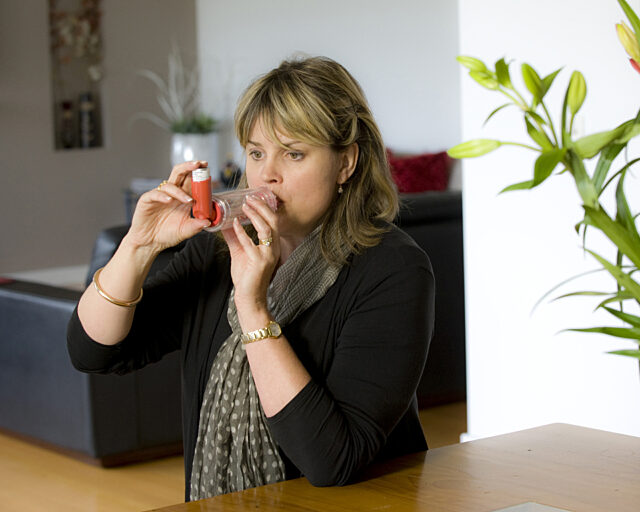
Most asthma medicines are inhaled through the mouth using a handheld device called an inhaler.
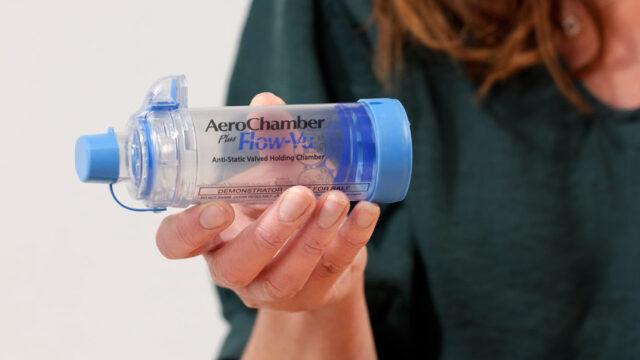
A spacer is a tube or chamber that attaches a metered-dose inhaler (MDI) and helps people breathe in asthma medications easier.
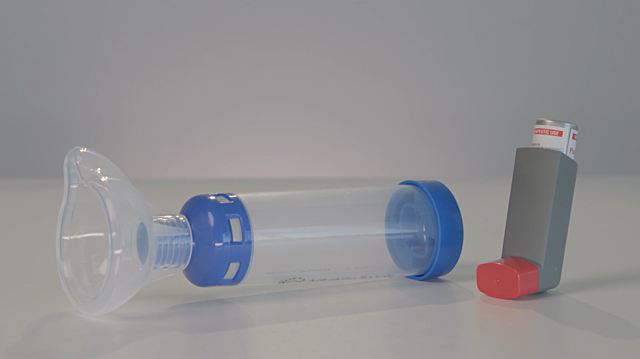
Watch the video and follow guided instructions with tips about using your inhaler and spacer.
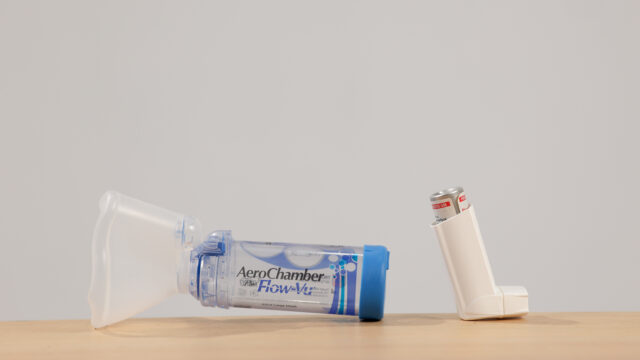
Watch a guided video tutorial with step-by-step instructions for using a metered dose inhaler (puffer) with a spacer for adults.
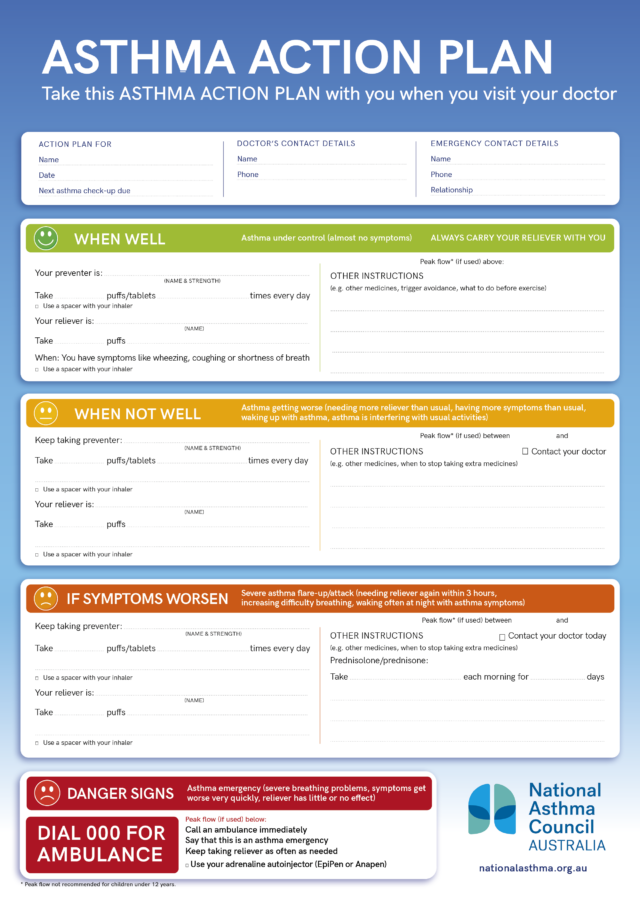
Written asthma action plans are one of the most effective asthma interventions available.
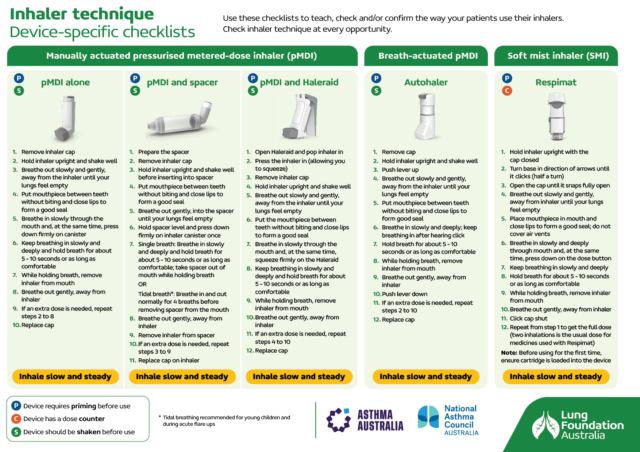
Produced by Lung Foundation Australia in collaboration with the National Asthma Council Australia and Asthma Australia, this handy summary of…
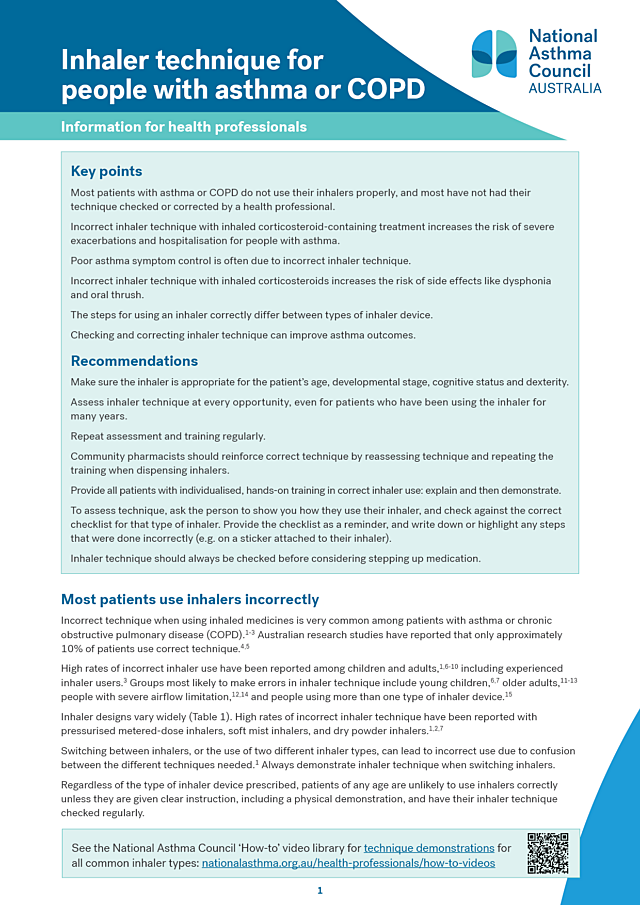
Latest evidence on the prevalence and impact of incorrect technique, plus checklists for using each inhaler correctly.