
Medicines, asthma action plans and regular reviews are essential for asthma management.
Medicines, asthma action plans and regular reviews are essential for managing asthma. Everyone with asthma should have their own up-to-date written asthma action plan with instructions on what to do when symptoms worsen.
Good asthma care also involves treatment for other health conditions that can affect asthma. A healthy lifestyle helps people with asthma stay in control of their symptoms and feel well.
The main aims of asthma treatment are:
Your doctor will decide which medicines are right for you and explain how to use them. Do not change your asthma medicines without talking to your doctor first.
Find out more: Asthma medicines
Regular asthma reviews (and asthma control tests) will help you stay in control of your asthma. An asthma review is a check-up with your doctor, nurse practitioner or pharmacist practitioner to ensure your asthma is well controlled, which means:
Find out more: Asthma review
An asthma action plan is a set of instructions for managing your asthma or your child’s asthma. The plan is made by you with your doctor, nurse practitioner or pharmacist practitioner, and then written down for you to keep.
An asthma action plan includes:
Everyone with asthma (all children and adults) should have their own, personalised asthma action plan. Asthma action plans should be checked and updated at least once a year. Bring your action plan or your child’s action plan whenever you visit your doctor.
Find out more: Asthma action plans


Asthma is a treatable health condition. With good management people with asthma can lead normal, active lives.
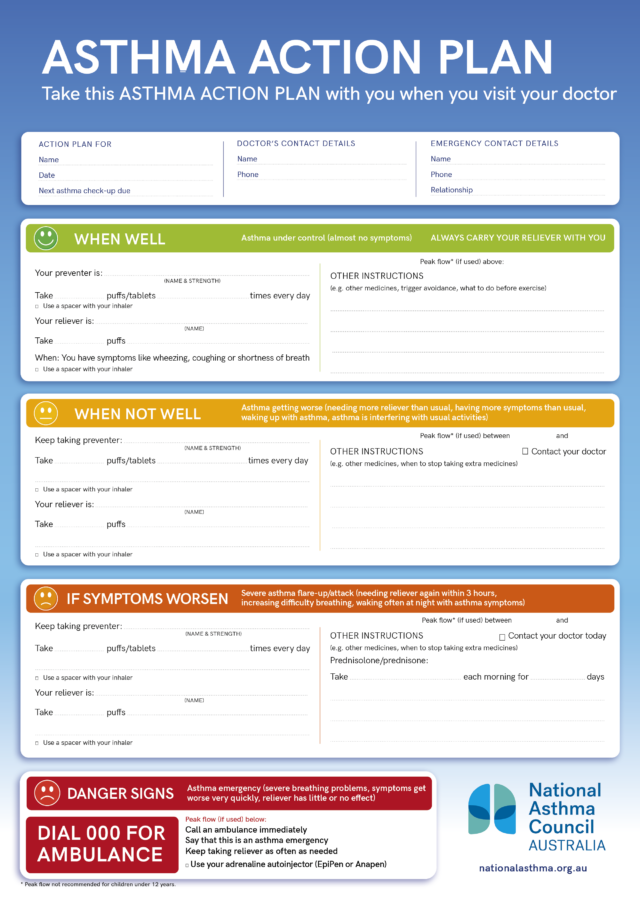
View and download a range of asthma action plans.
Helping people with asthma and allergies to make informed choices.

The National Asthma Council produces a wide range of evidence-based resources for health professionals, people with asthma and their carers.

Our frequently asked questions (FAQs) cover common questions and answers, to help you find information quickly and easily.