
Written asthma action plans are one of the most effective asthma interventions available.
An asthma action plan is a set of instructions for managing your asthma or your child/loved one's asthma. The asthma action plan is made by you and your doctor, nurse practitioner or pharmacist practitioner and written down for you to keep.
An asthma action plan includes:
To view and download asthma action plan templates, go to our Asthma Action Plan Library.
Asthma action plans are one of the most effective asthma interventions available. Use of an asthma action plan:

The aim of an asthma action plan is to help you or the person with asthma and/or their carer take early action to prevent or reduce the severity of an asthma attack.
The asthma action plan may be based on symptoms and/or peak expiratory flow (PEF) measurements and is individualised according to the pattern of the person’s asthma. In children, symptom-based plans are preferred.
Once completed, the asthma action plan is given to the person with asthma and/or their carer to keep. Parents should give a copy of their child’s asthma action plan to the school, pre-school and/or childcare facility.
Regular review of the asthma action plan is important as a person’s level of asthma severity or control may change over time.

Different asthma action plans suit different people, but all plans should have the same essential features. The plan should:
Basic details should include the date, the patient’s name, and their doctor’s contact details. Some also include contact details for the patient’s carer or emergency contact person.
Many asthma action plans follow a traffic light system for assessing the severity of exacerbations, moving from green for ‘under control’ to red for ‘emergency’.
Whichever system is used, the response plan needs to cover:
Inclusion of PEF measurements in the asthma action plan can be beneficial for people with more severe or difficult-to-control asthma, and those who are not readily aware of symptoms of limited airflow.
When PEF is used, the asthma action plan should be based on personal best rather than on predicted values. Care should be taken when increasing treatment for falls in PEF if there are no symptoms, as there is a risk of over-treatment.
PEF measurement is not recommended for children under 12 years. In most children with asthma, change in symptoms is as effective as PEF for indicating that asthma is getting worse.
A small number of people with asthma may benefit from long-term PEF monitoring. For more information and a PEF chart template go to Peak Flow Chart.
Asthma action plans can be uploaded to My Health Record, an online summary of your key health information, that you and your healthcare providers can view securely.
There are a number of apps available to help support in managing your asthma and your overall health and wellbeing. Asthma Buddy is a mobile-only website that gives you more flexibility and lets you input your asthma action plan into it so you know what day-to-day asthma medication to take. It also help you recognise if your asthma is getting worse and gives you advice on what to do about it.
Learn more about Asthma Buddy.
If you are reading this on your mobile device sign up for Asthma Buddy online: www.asthmabuddy.org.au/#login.
The Australasian Society of Clinical Immunology and Allergy (ASCIA) has developed a range of action plans for anaphylaxis, allergic reactions and eczema. Having an anaphylaxis action plan is particularly important for people at risk of serious allergic reactions.
The action plans are available from the ASCIA website:
Australian Asthma Handbook (national asthma guidelines for health professionals)
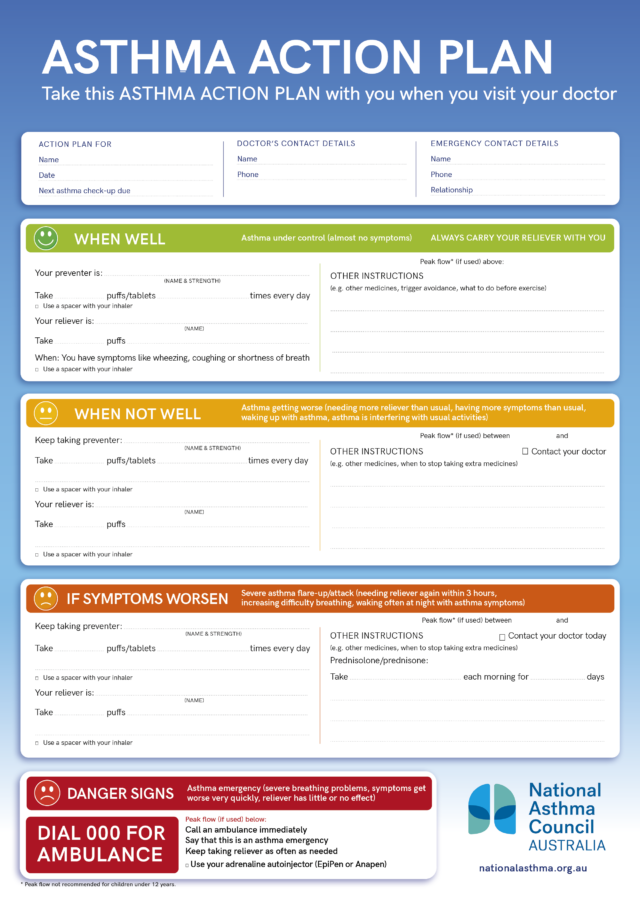
View and download a range of asthma action plans.
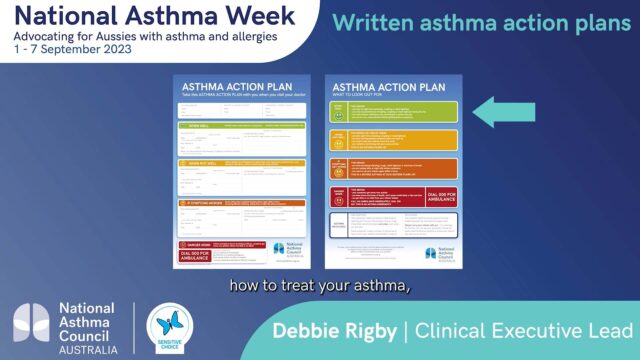
Asthma action plans are an essential tool to good asthma management, and why it’s important for anyone who has been diagnosed with asthma to have one.
An asthma action plan helps the person with asthma and/or their carer recognise worsening asthma and gives clear instructions on what to do in…

Medicines are essential for managing asthma.
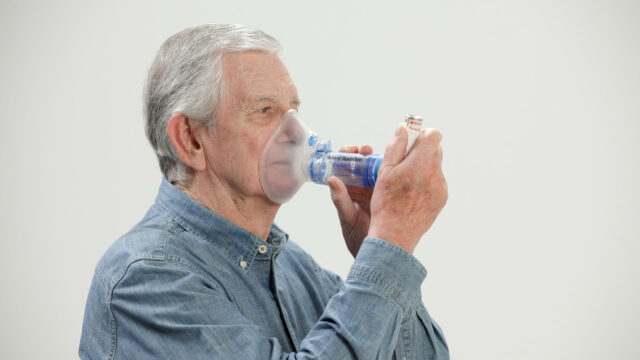
Our How-to video library includes demonstrations of correct technique for all the main types of inhalers and nasal sprays.