
Related video
This instructional video consists of two parts:
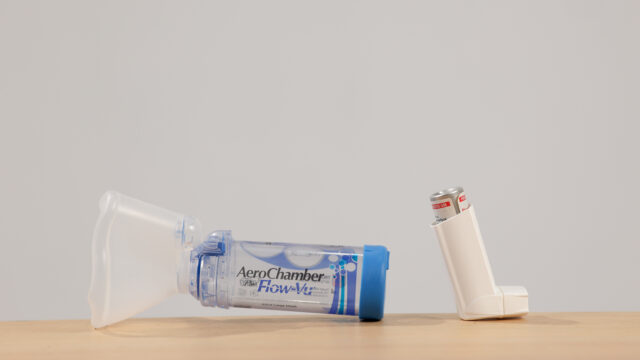
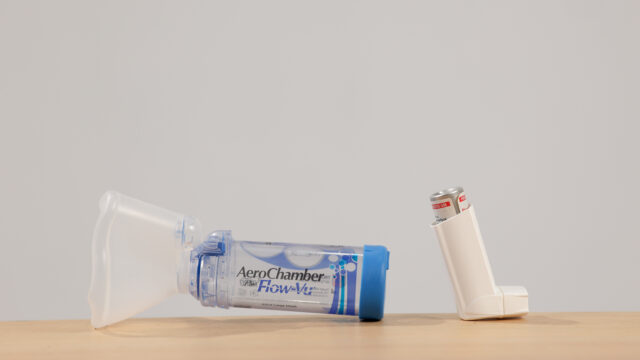
A metered dose inhaler provides a puff of medication to the lungs, in a measured dose. It consists of a plastic casing which contains a small metal canister. The casing has a mouthpiece that is covered by a cap.
Some metered dose inhalers have a dose counter, showing how many doses of medication is left. Each time the canister is pressed, one puff of the medication is released and the counter will count down in increments.
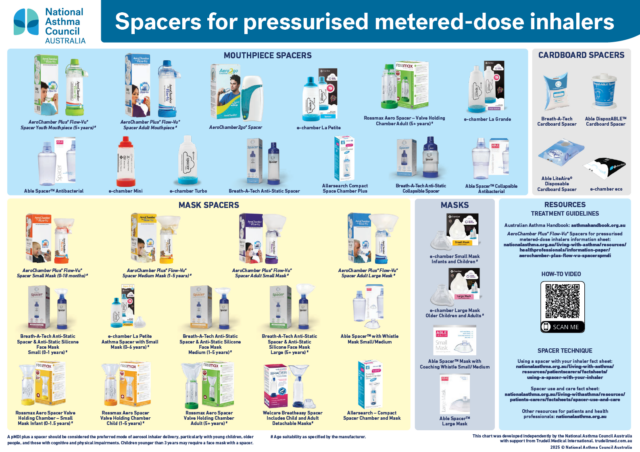
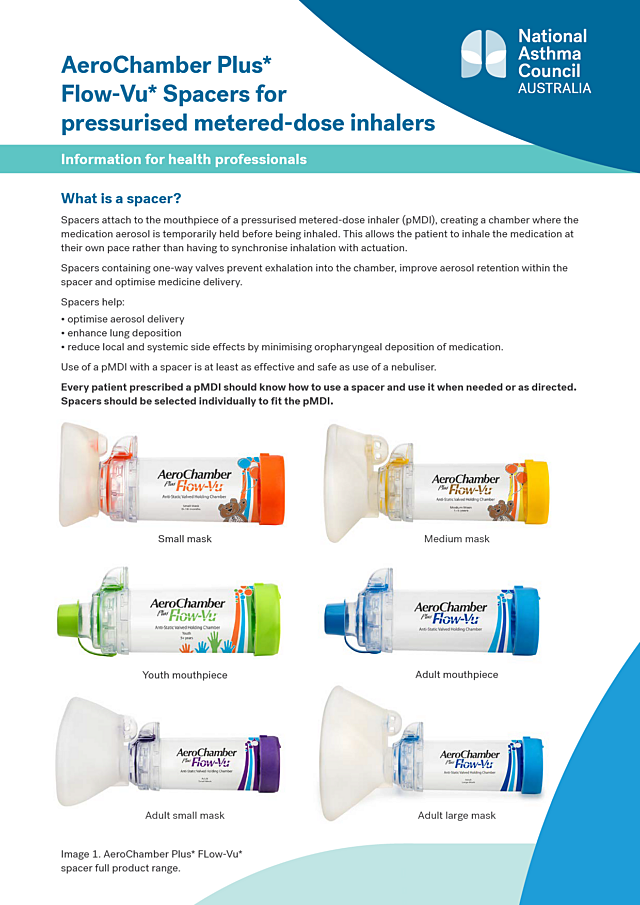
By using a spacer with the metered dose inhaler, the medication is better delivered down into the small airways, where it is most needed. Otherwise, without a spacer, the medication will remain in the mouth and the back of the throat.
The spacer holds the medication so that you can take as many breaths as needed, to inhale it. It takes away the need to coordinate between inhalation and actuation of the inhaler.
It’s important that people use asthma devices correctly, so that the right amount of medication is delivered into the lungs and patients can get the most benefit from it.
A mask should be used with a spacer when administering inhaler medication to children under 3 years or to individuals who have difficulty coordinating breaths. Babies and toddlers may not be able to close their lips around the mouthpiece of a spacer or inhale correctly. Some adults or children may find it challenging to synchronise the press of the inhaler with taking a deep breath or may not be able to maintain a tight seal with the spacer mouthpiece.
The initial steps and cleaning instructions are the same as the previous demonstration.
Thank you to Sherri Barden, community pharmacist and asthma educator, and the patients who participated in this video.
Produced independently by the National Asthma Council Australia 2025 with support by Trudell Medical International.
Disclaimer
Although all care has been taken, this video is a general guide only, which is not a substitute for assessment of appropriate courses of treatment on a case-by-case basis. The National Asthma Council Australia expressly disclaims all responsibility (including for negligence) for any loss, damage or personal injury resulting from reliance on the information contained herein.