Resource
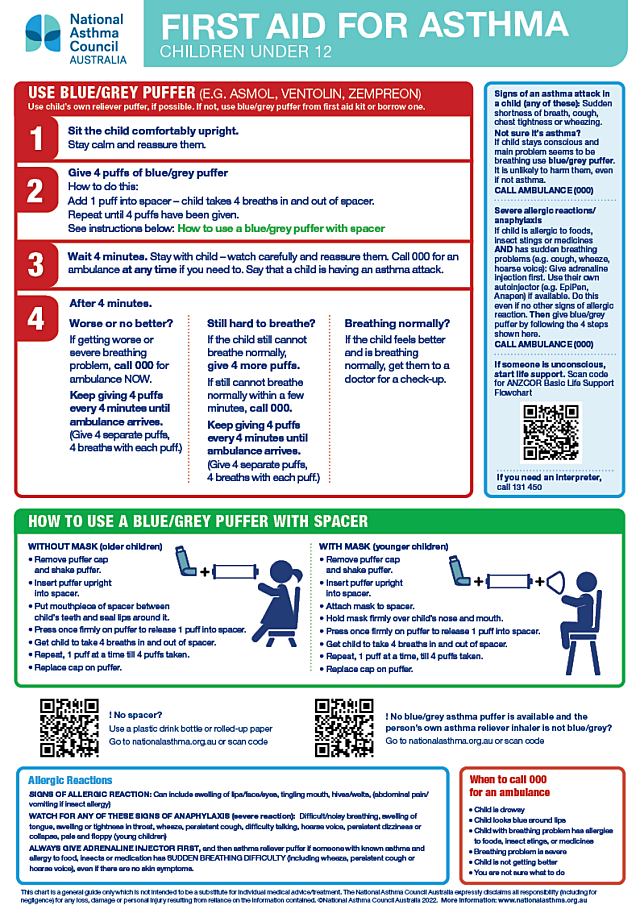
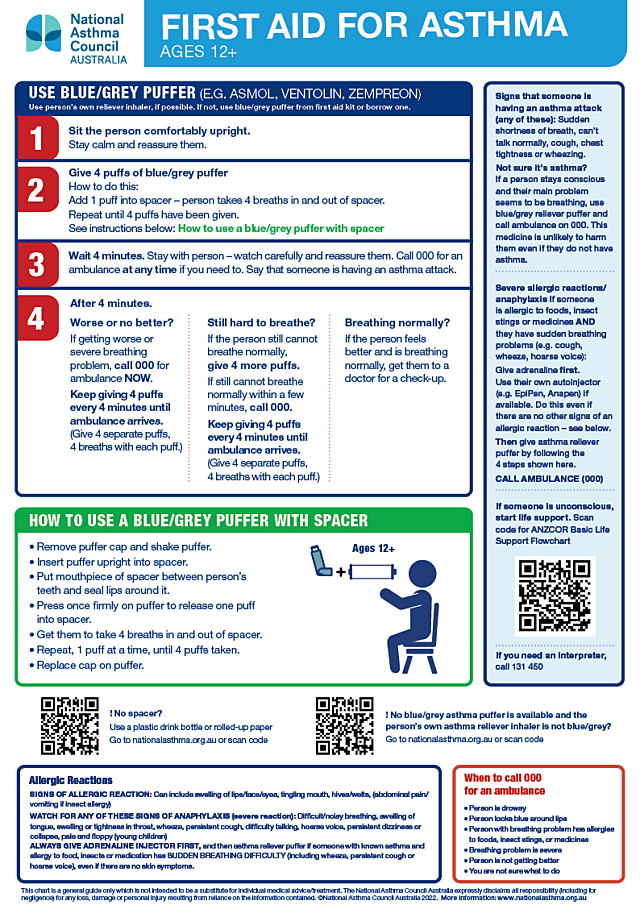
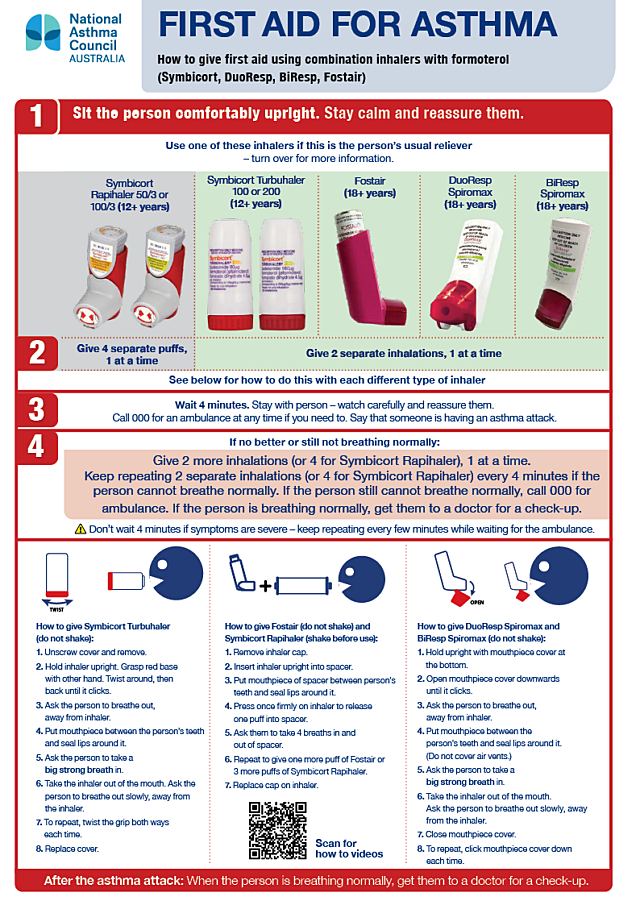
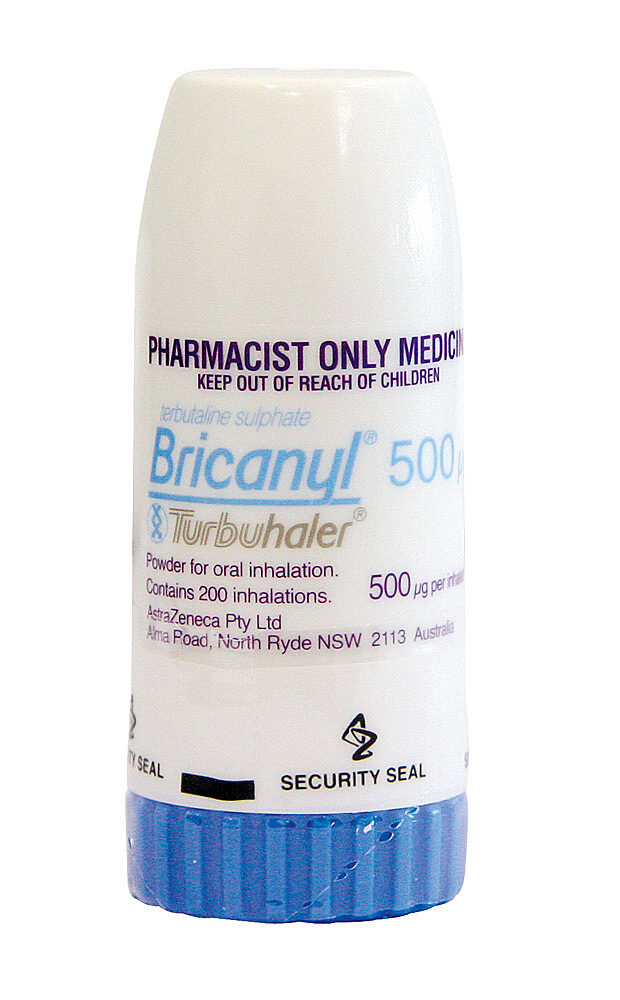
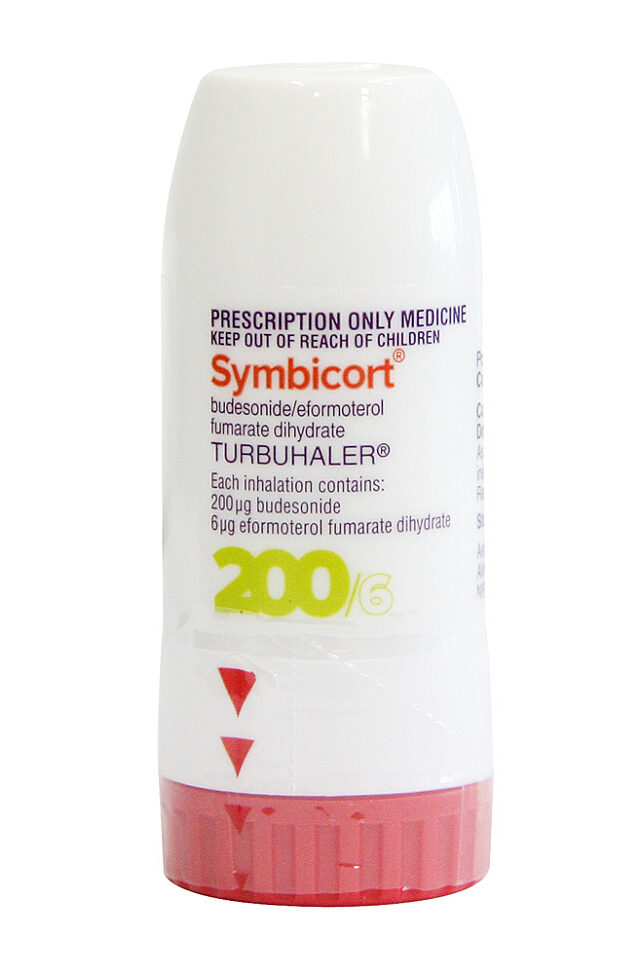
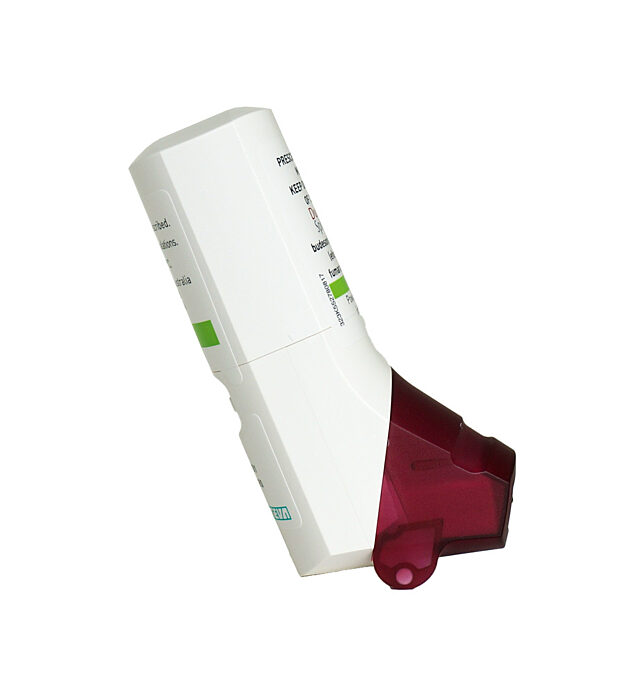
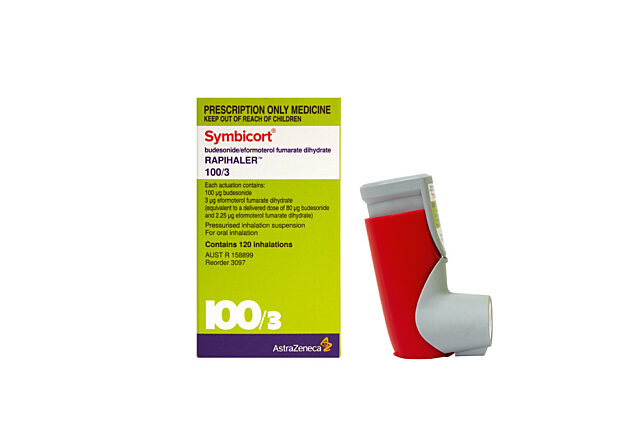
National Asthma Council Australia first aid for asthma charts are designed to be used by people with training in first aid. To follow the instructions, you will need to know how to use an asthma inhaler and how to use an adrenaline auto-injector.
Quick action may help prevent an asthma attack from becoming an asthma emergency.
Signs of an asthma attack can include any of these:
If a person stays conscious and their main problem seems to be breathing, follow the asthma first aid steps. Asthma reliever medicine is unlikely to harm them even if they do not have asthma.
If someone is unconscious, follow the DRSABCD steps for life support.
Follow the person’s Action Plan for Anaphylaxis if available. If the person has known severe allergies and seems to be having a severe allergic reaction, use their adrenaline autoinjector (e.g. EpiPen, Anapen) before giving asthma reliever medicine.
For more information please visit asthma first aid.
Health professionals can order free hardcopies from by emailing [email protected].
Last reviewed 1 Jan 2022