Resource
Indoor humidity levels can play an important role in your household’s health, particularly for people with asthma or allergies.
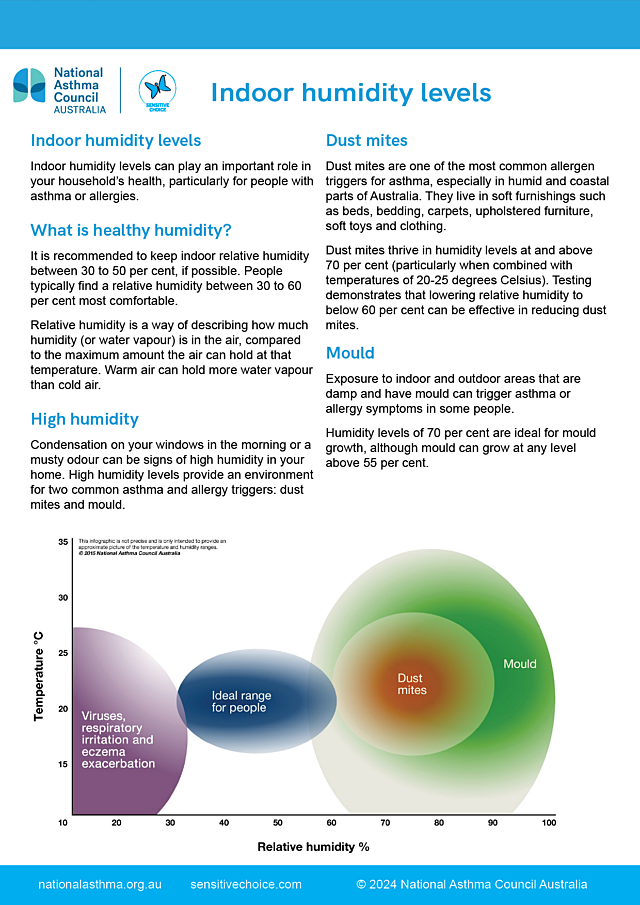
It is recommended to keep indoor relative humidity between 30 to 50 per cent, if possible. People typically find a relative humidity between 30 to 60 per cent most comfortable.
Relative humidity is a way of describing how much humidity (or water vapour) is in the air, compared to the maximum amount the air can hold at that temperature. Warm air can hold more water vapour than cold air.

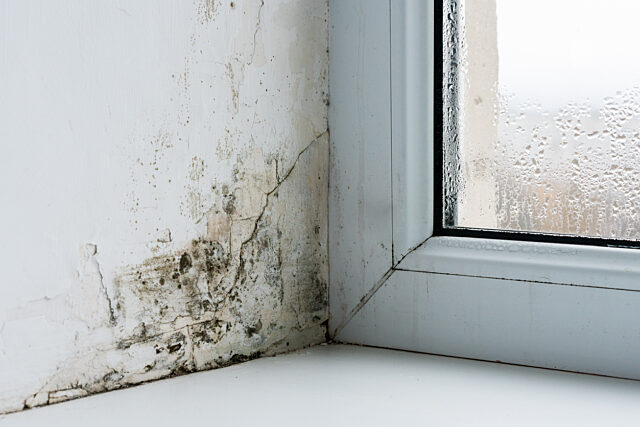
Condensation on your windows in the morning or a musty odour can be signs of high humidity in your home. High humidity levels provide an environment for two common asthma and allergy triggers: dust mites and mould.

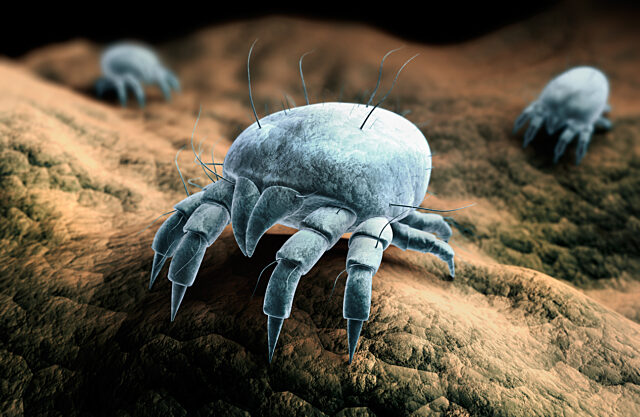
Dust mites are one of the most common allergen triggers for asthma, especially in humid and coastal parts of Australia. They live in soft furnishings such as beds, bedding, carpets, upholstered furniture, soft toys and clothing.
Dust mites thrive in humidity levels at and above 70 per cent (particularly when combined with temperatures of 20 to 25 degrees Celsius). Testing demonstrates that lowering relative humidity to below 60 per cent can be effective in reducing dust mites.

Exposure to indoor and outdoor areas that are damp and have mould can trigger asthma or allergy symptoms in some people.
Humidity levels of 70 per cent are ideal for mould growth, although mould can grow at any level above 55 per cent.
Signs of low humidity in the home include
Very dry air increases the chance of catching airborne viruses like a cold or the flu – possibly because they can survive longer in dry, cool conditions, and nasal irritation can make them easier to catch. Very dry air can make eczema worse and dry skin can be uncomfortable.
A dehumidifier is a device that removes the moisture from the air in your home and reduces indoor humidity levels.
Preventing and drawing out excess moisture from your home will help maintain an optimal indoor humidity level between 30 to 50 per cent. This can also reduce or eliminate the likelihood of dust mites or mould developing.
When purchasing a dehumidifier, it’s essential that you choose a product that suits your environment. A desiccant dehumidifier is more suitable for mild-cold temperatures, whilst a compressor dehumidifier is better suited for warmer climates.
It’s important that the dehumidifier has capacity to effectively cover the size of the room or area of the home that you need it for.
Always check the specifications of your dehumidifier to ensure that it is suitable for you.
A humidifier is a device that adds moisture to the air and works to increase indoor humidity levels.
Unless you live in specific areas within Australia with an extremely dry climate, or have been medically advised by a health professional, humidifiers are not usually recommended for everyday use.
Humidifiers may be suited to very dry indoor air but should not be set above 50 per cent relative humidity. They should include a feature to sterilise any mist they produce, so it does not spread bacteria, and turn off automatically once the desired humidity is reached.

Disclaimer
It is important to note that information contained in this fact sheet is not intended to replace professional medical advice. Any questions regarding a medical diagnosis or treatment should be directed to a medical practitioner.
Last reviewed 7 June 2024