Resource
‘Thunderstorm asthma’ is a potent mix of pollens, weather conditions and rain that can trigger severe asthma symptoms.
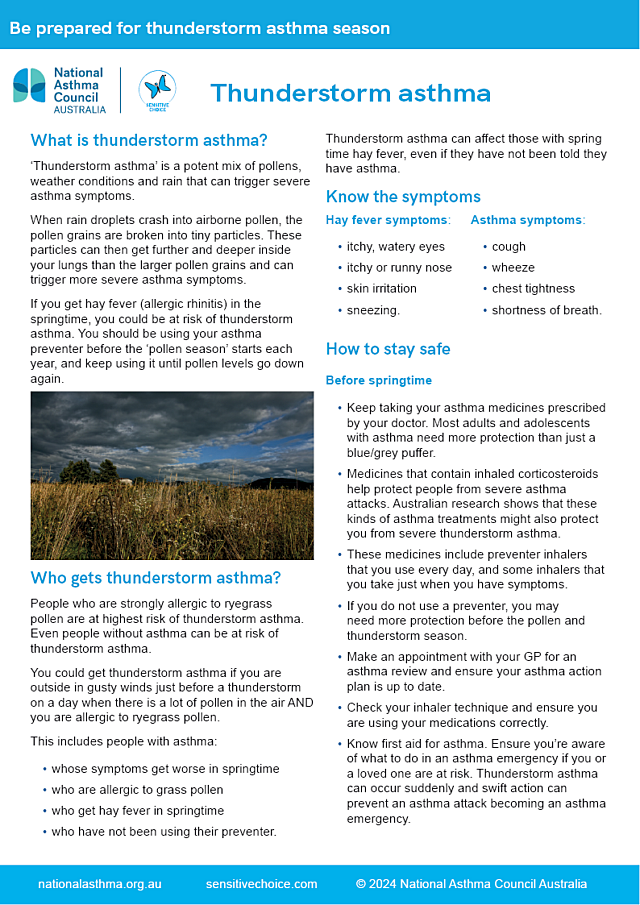
When rain droplets crash into airborne pollen, the pollen grains are broken into tiny particles. These particles can then get further and deeper inside your lungs than the larger pollen grains and can trigger more severe asthma symptoms.
If you get hay fever (allergic rhinitis) in the springtime, you could be at risk of thunderstorm asthma. You should be using your asthma preventer before the ‘pollen season’ starts each year, and keep using it until pollen levels go down again.
People who are strongly allergic to ryegrass pollen are at highest risk of thunderstorm asthma. Even people without asthma can be at risk of thunderstorm asthma.
You could get thunderstorm asthma if you are outside in gusty winds just before a thunderstorm on a day when there is a lot of pollen in the air AND you are allergic to ryegrass pollen.
This includes people with asthma:
Thunderstorm asthma can affect those with spring time hay fever, even if they have not been told they have asthma.
Hay fever symptoms:
Asthma symptoms:
On Monday 21 November 2016, severe thunderstorm activity in Victoria led to thousands of people suddenly having asthma attacks and finding it hard to breathe. Because so many people needed urgent asthma treatment at one time, it was hard for ambulance and hospital emergency rooms to help everyone.
From that terrible event we learned that thunderstorm asthma can affect people living in city or country areas, even if they have not been diagnosed with asthma. People with springtime hay fever were most likely to have thunderstorm asthma symptoms.
We also learned that people with asthma who were not using a preventer were more likely to have a severe thunderstorm asthma attack.
Disclaimer
It is important to note that information contained in this fact sheet is not intended to replace professional medical advice. Any questions regarding a medical diagnosis or treatment should be directed to a medical practitioner.
Last reviewed 7 Nov 2024